Loading...
Lesson 1: The Stories That Preserve Our History and Culture
50 min
California CCSS: Focus Standards
California CCSS: Supporting Standards
ELD Standards
Student Lesson
Lesson 1: The Stories That Preserve Our History and Culture
Student Learning Objectives
1
Content
Students will explore how knowledge is recorded and shared by drawing connections between the central ideas in a folktale and an informational article.
2
Language
Students will exchange ideas and use observation and inference sentence frames with evidence to explain how storytelling connects to memory, identity, and survival.
3
Foundational Skills
Students will compare and contrast how a folktale and an informational article explain why stories matter.
Essential Question
How does memory help us understand who we are, and what is lost when memory disappears? How do stories help communities survive change and imagine a future worth building?
Connections to
Knowledge-Building:
Students begin the unit by exploring stories as systems for carrying memory, wisdom, history, and cultural knowledge.
Enduring Understanding:
Stories shape how humans remember the past and imagine the future.
Future Lessons:
In Lesson 2, students will build background on the science fiction aspects of the novel. In Lesson 3, students will continue to build background knowledge by exploring how their brain forms memories based on stories.
Unit Performance Task:
This first lesson introduces students to some of the central ideas of the novel, including storytelling, memory, history, and cultural traditions, which will eventually be central ideas that students can explore further in their own narrative writing.
Lesson Pacing
| Lesson Flow | Purpose of Learning Experience |
|---|---|
Launch15 Minutes | Students will begin the unit by reading and discussing a folktale about shared wisdom. |
Learning in Action30 Minutes | Part A: Annotating for Central Ideas (RI.8.2) Students partner-read an informational article and annotate for reasons humans preserve stories and histories, and discuss why stories from the oral tradition are as important as evidence-based histories. Part B: Making Connections Between Texts (RL.8.2, RI.8.2) Students use the Give One, Get One routine to connect the folktale’s theme to the article’s central idea, citing evidence from both texts. |
Look Back5 Minutes | Students reflect in writing on what might happen if stories about the past disappear. |
Vocabulary
Vocabulary Addressed in Lesson
Not available for this lesson
Vocabulary for Additional Support
- species
- a group of living things of the same kind
- foraging
- the acquisition of food by hunting, fishing, or the gathering of plant materials
- oral history or “oral tradition”
- stories and memories passed down by speaking instead of writing
- evidence-based history
- reports of the past based on written records
Material List
Unit 4 Lesson 1 Student Edition
Routines
Turn-and-Talk
Close Read & Annotation
Give One, Get One
Quick Write
Lesson Sequence
Explain that students will begin the unit by reading a folktale about how wisdom is shared.
Say: In this unit, we will explore how stories preserve memory, identity, and culture. Today, we will read a folktale and an informational article to consider what each teaches about wisdom and history, and how they are shared.
Turn-and-Talk
Provide students with copies of “How Wisdom Became the Property of the Human Race” and display the story for the class. Read aloud as students follow along. Then, pair students to share responses to the following questions.
Say these Directions: As we read the folktale, consider the lesson the story conveys. Then, take turns discussing the following questions with a partner.
Display the following questions for students.
Father Anansi owns all the wisdom at the start. Do you think that is actually possible? Why or why not?
I do not think one person can hold all the wisdom of the world. The story tells us that Kweku Tsin, who is just a child, notices and realizes something Father Anansi does not. Father Anansi admits, “I find you possess more [wisdom] than I do.” He is angry that he can’t possess it all and that he needs his son to give him wisdom about climbing the tree.
How does Kweku Tsin know to suggest a different way to reach the top of the tree?
Kweku Tsin “made up his mind to watch carefully” and “for some time Kweku Tsin watched his father’s vain attempts.” We can infer that his wisdom came from paying attention, thinking carefully, and living in the world. The story suggests that wisdom can come from experience and observation.
What does this folktale explain about how wisdom should work in the world?
The folktale explains that wisdom should be shared and that trying to keep knowledge for yourself will fail. It also explains why wisdom is spread across all humans instead of just one person, because we benefit when we can share our knowledge.
Connection to Today's Learning:
Say: We have seen how a folktale can convey a lesson about how wisdom is shared. Next, you will read an informational article to explore why humans record and preserve stories over time.
Part A: Annotating for Central Ideas (RI.8.2) (20 minutes)
Close Read & Annotation
Have students remain in pairs. Provide students with copies of “How We Have Turned Memories and Stories into Histories.” Partners will take turns reading paragraphs or sections of the article. Students will annotate for central ideas as they read.
Say these Directions: You will read an informational article that considers why humans record and share stories and histories. As you read, think about the central idea the article conveys. Look for repeated ideas or words, such as history, stories, and memory. Consider the main message the author wants you to think about these key topics.
Teach: Identifying a Central Idea
Say these Directions: With your partner, annotate for the following:
Display the following annotation criteria.
Reasons humans have recorded history throughout time
References to memory, identity, or survival
Examples of why oral traditions are as important as evidence-based histories
Provide time for students to read and annotate. Circulate to ensure students are identifying repeated ideas and connecting details to a central idea. Then bring students back together for a whole-class discussion.
Participate in the class discussion of the following questions:
Ask: According to the article, what is one reason humans record stories?
The article shows that people have used stories and records to “share what they know and learn.” We read that history is a “shared knowledge of the past.” This tells us that humans record stories to preserve memory so that important knowledge can last beyond one person’s lifetime.
Ask: Why are oral stories as important as evidence-based histories?
According to the article, when only written records remain, people lose “the vivid, personal sense of engagement with the past that existed in oral cultures where history was always told as a story.” Written history usually records limited information—often about upper classes and rulers—whereas oral histories include everyone.
Part B: Making Connections Between Texts (RL.8.2, RI.8.2) (10 minutes)
Give One, Get One
During Give One, Get One, one student will share a response, supporting it with evidence from both texts. Then, the second student will share a response to the same question. Students will compare responses and add evidence to create a deeper understanding of the texts. Students might switch partners or stay with the same partners from Learning in Action Part A.
Say these Directions: You will now make connections between the folktale and the informational article. For each question, find at least one detail from each text and explain how they connect.
Display the following questions for students to use as they engage in the Give One, Get One routine.
The article suggests that stories have always been humanity’s most powerful tool for survival. How does this idea connect to the Anansi story? Use at least one piece of evidence from both texts to support your answer.
From the article, we read that “even the earliest members of our species . . . could share ideas not just about where water holes or lions are, but also about last year’s bush fire.” These “histories” are important to basic survival, and the “origin stories” share important ideas about the world. The Anansi story is one of those “origin stories.” It shares the important idea that wisdom cannot be contained, and it should not be. The story explains, “The wisdom contained in it escaped and spread throughout the world.” Together, the texts suggest that survival depends on sharing knowledge, not hiding it or hoarding it.
The Anansi story was told long before anyone wrote it down. What does that suggest about the purpose of this specific example of the oral tradition?
The article tells us that “people who cannot write down information rely on such ‘oral tradition’” to pass down knowledge. The Anansi story teaches a lesson about sharing wisdom. In the story, we read that Father Anansi drops the pot and “the wisdom contained in it escaped and spread throughout the world.” The story, as part of the oral tradition, was a way for people to pass on values and survival knowledge.
What message does each text communicate about knowledge, and what shared idea do they reveal when considered together?
In the folktale, the message is that wisdom does not belong to one person alone. In the article, the central idea is that humans preserve stories and records so knowledge can survive across time. When we compare these ideas, we can conclude that important knowledge has to be recorded and shared if people want to preserve it.
Provide time for students to discuss and exchange ideas. Circulate to ensure students are using evidence from both texts and clearly explaining the connection.
Check for Understanding
Provide students with a confidence continuum (i.e., 1–5). As needed, model how to demonstrate a level of confidence using the continuum.
Reflection |
|---|
Reflect on your ability to make connections across texts using the Reflection routine.
|
Students have explored the idea that stories act as memory systems by comparing a folktale about shared wisdom with an informational article about how humans record history. Transition students from discussion to synthesis by instructing students to complete a Quick Write.
Quick Write
Say these Directions: Read the question below and then write a brief response (two to three sentences) in your journal. Use at least one detail from the folktale and one from the article in your response.
Ask: What might happen if stories about our past were to disappear?
If stories about our past disappeared, people could lose important knowledge and part of their identity. In the Anansi story, the message is that wisdom should be shared by everyone, so if that story disappeared, people might lose that lesson about community. In the article, humans record stories so that memory and survival knowledge can last over time. Without those stories, a group might forget what it values, what it has learned, and even how it survived before.
Provide students with a copy of the following articles:
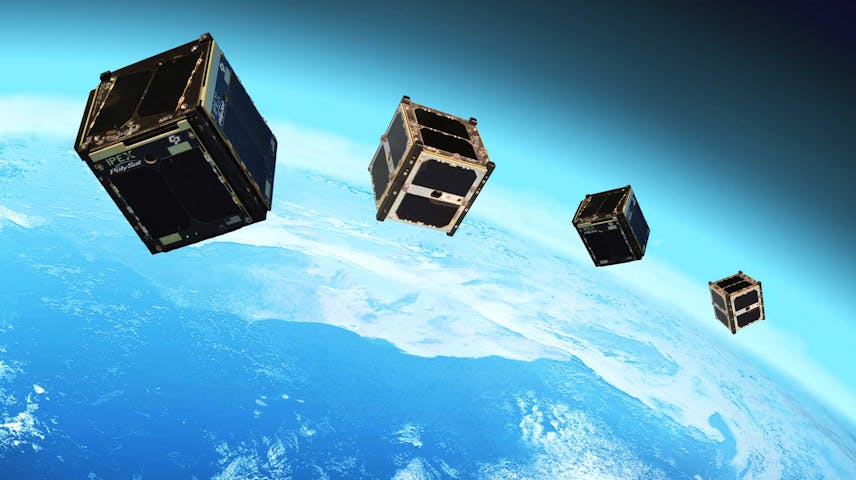
“10 Things: Going Interstellar”
“These Sci-Fi Visions for Interstellar Travel Just Might Work”
As students read, instruct them to annotate and take notes in their Journal on the following questions:
What makes interstellar travel different from other types of space exploration humans have done? Which challenges are physical? Which are psychological or social?
In the WIRED article, how do scientists and writers imagine solving problems that do not yet have final answers?
If humans had to leave Earth permanently, what would matter most to take with us, and why?
Lesson Texts
Short-Form Text
10 Things: Going Interstellar
NASA
Read text

Short-Form Text
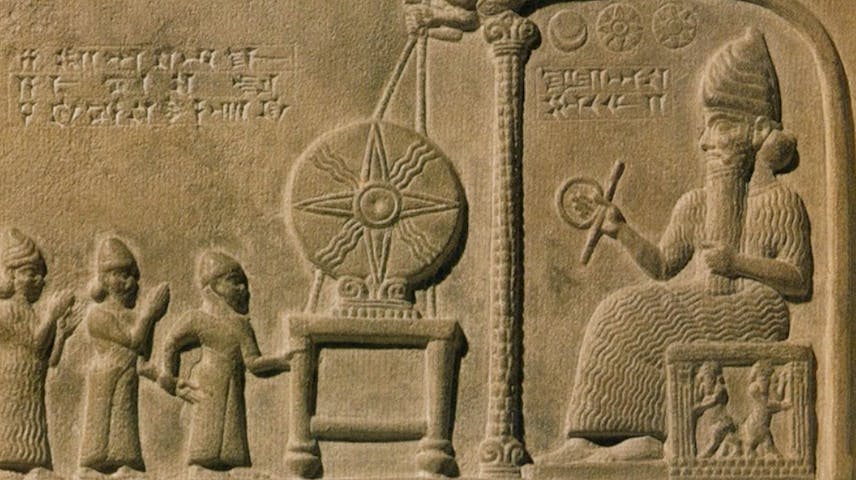
How We Have Turned Memories and Stories into Histories
Big History Project, adapted by Newsela staff
Read text
Short-Form Text
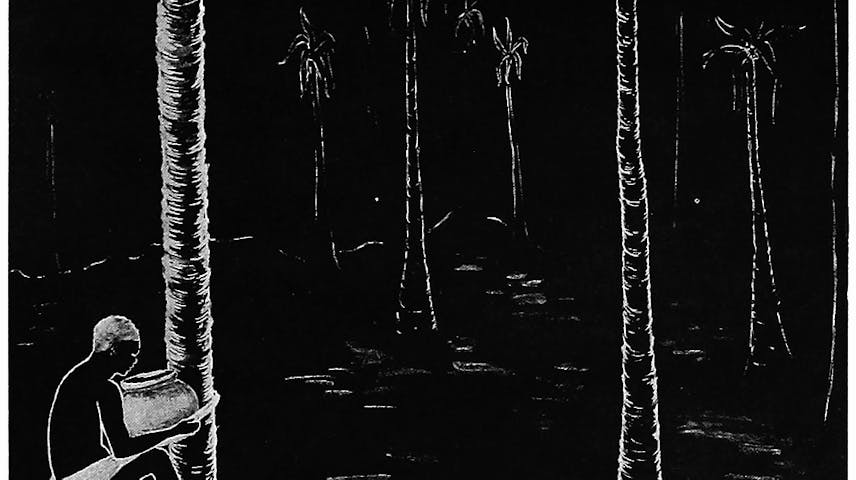
How Wisdom Became the Property of the Human Race
Compiled by W. H. Barker and Cecilia Sinclair, in the book West African Folk-Tales.
Read text
Short-Form Text
These Sci-Fi Visions for Interstellar Travel Just Might Work
Ramin Skibba and Les Johnson, Wired Magazine
Read text