Loading...
Lesson 1: Racing to the Moon
50 min
California CCSS: Focus Standards
California CCSS: Supporting Standards
ELD Standards
Student Lesson
Lesson 1: Racing to the Moon
Student Learning Objectives
1
Content
Students will cite textual evidence to explain the scientific and mathematical challenges NASA aimed to solve and evaluate reasons supporting the push for the moon mission.
2
Language
Students will explain historical and scientific context using cause-effect transitions and domain-specific vocabulary in discussion and brief summary writing.
Essential Question
How do curiosity, evidence, and collaboration lead to discovery?
Connections to
Knowledge-Building:
Students begin the unit by building historical context about the Cold War, the Space Race, and NASA’s urgent scientific mission.
Enduring Understanding:
Scientific discovery grows through questions, evidence, and collaboration, and history becomes fuller when we study the people behind major achievements.
Future Lessons:
Students will examine barriers in STEM and consider why some contributors to the Space Race were overlooked.
Unit Performance Task:
Students will draw on this context as they develop an understanding and then explain the contributions of the hidden innovators in NASA’s space program.
Lesson Pacing
| Lesson Flow | Purpose of Learning Experience |
|---|---|
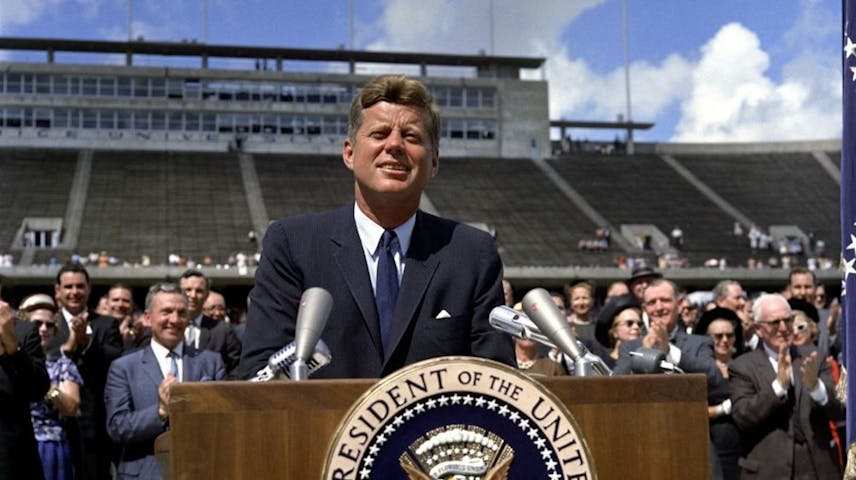
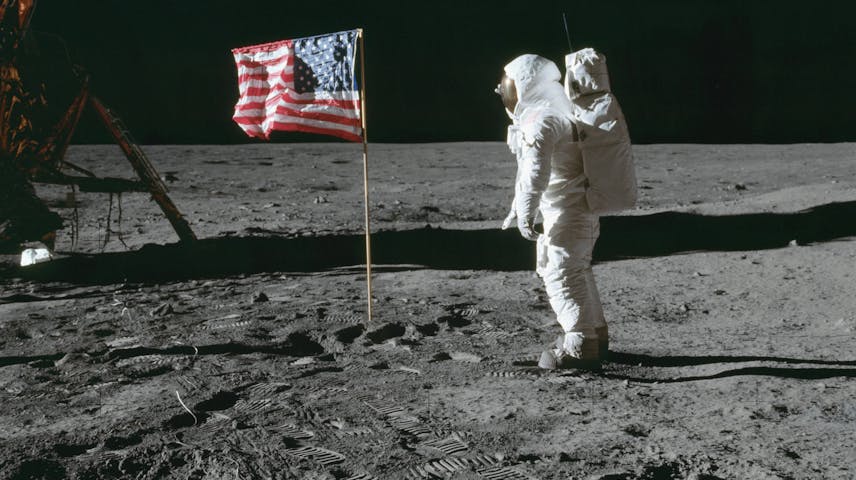
Launch15 Minutes | Students will engage in Think-Pair-Share to preview texts and images about the Space Race and build initial understanding of why space exploration became a high-stakes national goal. |
Learning in Action30 Minutes | Part A: Jigsaw Resources (RI.6.1) Students will engage in a Jigsaw Reading of three articles about the historical Space Race between the United States and Russia. Part B: Jigsaw Deep Dive (RI.6.8, SL.6.1) Students will complete their Jigsaw analysis by teaching their group what they learned and integrating the new ideas shared by their classmates. Students will also participate in group discussions about the articles. |
Look Back5 Minutes | Students will synthesize the day’s learning in a brief evidence-based summary using cause-effect language and domain-specific vocabulary. |
Vocabulary
Vocabulary Addressed in Lesson
- engineering
- designing and building tools, systems, or machines
- trajectory
- the path something follows as it moves
- orbit
- the curved path of one object around another
- innovation
- a new idea, method, or invention
Vocabulary for Additional Support
- significant
- important in a clear or lasting way
- segregation
- the forced separation of people by race
- discrimination
- unfair treatment based on identity
Material List
- Unit 3 Lesson 1 Student Edition
- Jigsaw Worksheet
Routines
- Think-Pair-Share
- Jigsaw Reading
- Turn-and-Talk
- Quick Write