Loading...
Lesson 17: Hidden Figures, Chapter 20
50 min
California CCSS: Focus Standards
California CCSS: Supporting Standards
ELD Standards
Student Lesson
Lesson 17: Hidden Figures, Chapter 20
Student Learning Objectives
1
Content
Students will integrate information presented in visuals and informational texts to explain how Chapter 20 and the Sit-Ins source set develop a shared idea about collaboration.
2
Language
Students will synthesize evidence using comparative transitions and precise academic nouns to explain how groups collaborated to achieve shared goals.
3
Foundations
Students will use context clues and reference materials to determine the meaning of monitor.
Essential Question
How do curiosity, evidence, and collaboration lead to discovery?
Connections to
Knowledge-Building:
Students connect Chapter 20 to civil rights activism by comparing scientific teamwork with student-led social protest.
Enduring Understanding:
Scientific discovery and social change both grow through organized effort, evidence, and people pushing against limits.
Future Lessons:
Students will carry this multi-source synthesis work into Chapter 21 and the supplemental article “Glenn Orbits the Earth.”
Unit Performance Task:
Students need to synthesize information from multiple sources in order to explain an innovator’s contribution and significance in their final research writing.
Lesson Pacing
| Lesson Flow | Purpose of Learning Experience |
|---|---|
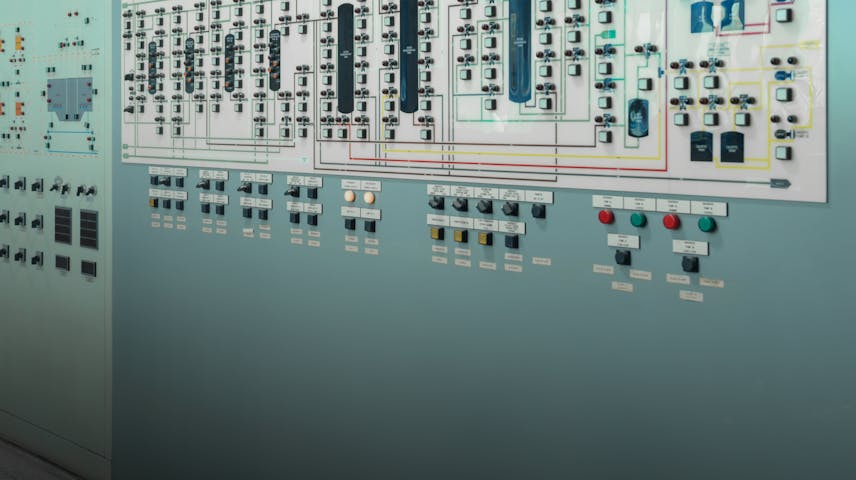
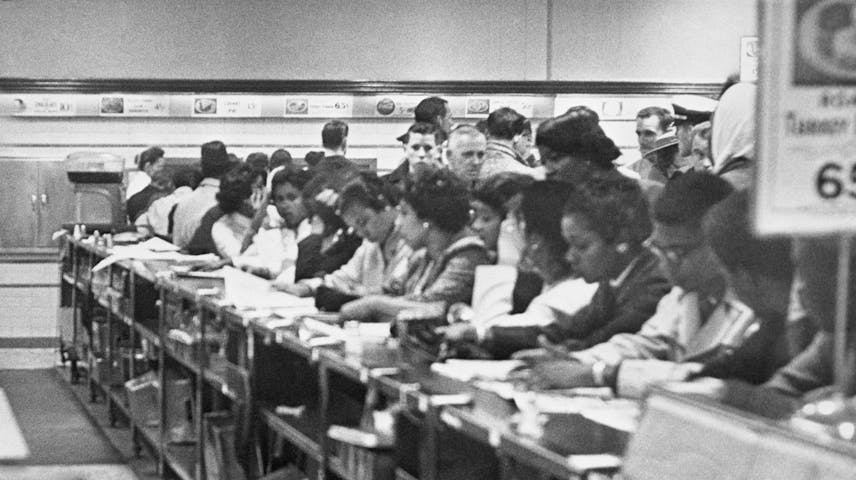
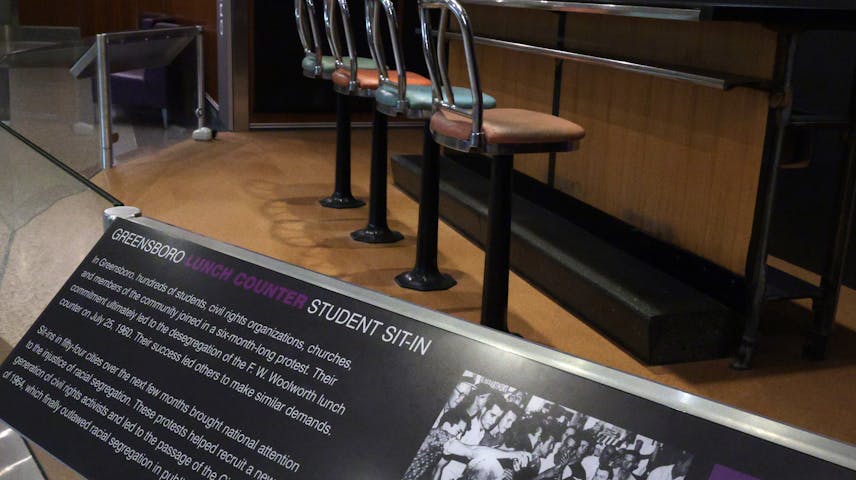
Launch5 Minutes | Students will look at images and draw conclusions about how they connect to the ideas explored in this unit. |
Literacy Lab10 Minutes | Explicitly teach students to use context clues and reference tools to define key social and scientific terms needed for synthesis of sources. |
Learning in Action30 Minutes | Part A: Seeing Collaboration Across Sources (RI.6.7)Stude nts will use a 3-Column Chart to integrate ideas from the Greensboro lunch counter images, a Sit-Ins text, and Chapter 20. Learning in Action B: Writing a Synthesis Response (RI.6.7) Students will answer the text-dependent question using evidence from visual and written sources. |
Vocabulary
Vocabulary Addressed in Lesson
- monitor
- watch carefully to gather information
Vocabulary for Additional Support
- demonstration
- public action that shows support or protest
- influence
- power to affect a decision or action
Material List
- Student copies of Hidden Figures (Young Readers’ Edition) by Margot Lee Shetterly
- Unit 3 Lesson 17 Student Edition
- 3-Column Chart graphic organizer
- Race Strategy Organizer
Routines
- Think-Pair-Share
- RACE Strategy Response
- Quick Write