
Imagine this: it’s 1955. You’re cruising down a wide American street in a candy-apple red Chevrolet with fins the size of shark tails. The radio is blasting Elvis Presley. You pull into the drive-in diner, and a girl on roller skates brings you a cheeseburger and a milkshake. Life feels electric. How did America go from wartime rationing to this explosion of cool in less than a decade? Buckle up—it’s quite a ride.
From War to Wow
When World War II ended in 1945, Americans were ready to celebrate. Soldiers came home, families reunited and the country exhaled. After years of sacrifice—rationing food, rubber and gasoline—and the deaths of millions in the war, people were hungry for fun, comfort and newness. The economy boomed. Factories that once built tanks and bombers switched to making refrigerators, televisions and cars. Lots and lots of cars.
The suburbs exploded in size. Developers built massive neighborhoods like Levittown, New York, where thousands of nearly identical homes were sold to returning veterans at affordable prices. Families packed up and moved out of the cities, and with them came a brand-new American lifestyle built around the automobile.
Car Culture: The Bigger the Fins, the Better
If the 1950s had a mascot, it could have been a car. Not just any car, but a massive, gleaming, chrome-covered beauty with tailfins inspired by jet aircraft. Automakers like Chevrolet, Ford and Cadillac competed to build the flashiest rides on the road. Owning a cool car wasn’t just transportation, it was a statement that said: I made it. Life is good.
Teenagers especially fell in love with cars. The hot rod craze took off, with young guys customizing old cars to make them faster and sleeker. Cruising—driving slowly up and down the main street of town to see and be seen—became the Friday night activity in towns across America. No destination needed. The drive itself was the point.
The car was also the perfect place to listen to a new kind of music that teens loved—rock and roll. Elvis was a huge sensation, and soon after his rise to fame came a tidal wave of other artists like Chuck Berry, Buddy Holly and, in the 1960s, the Beach Boys. This was not your parents’ music.
Drive-Ins: Dinner and a Movie, No Pants Required
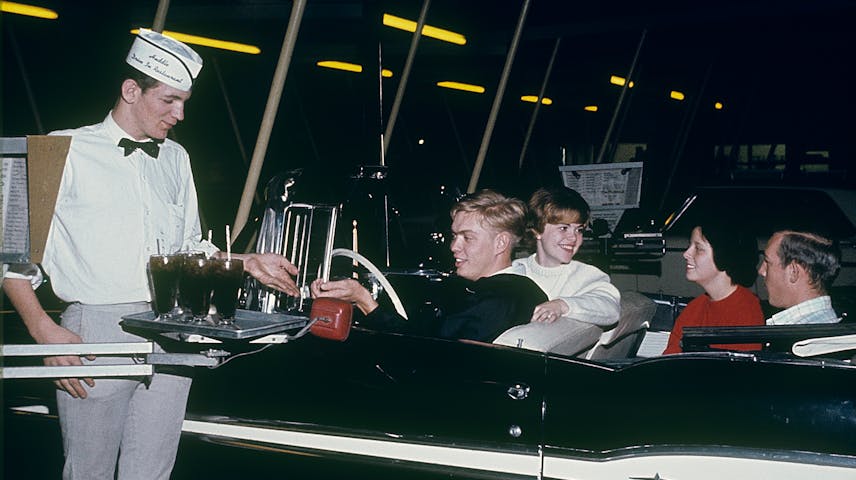
The car culture gave birth to two great American inventions: the drive-in restaurant and the drive-in movie theater. At drive-in diners like Sonic and A&W, you parked your car, placed your order through a speaker and a carhop (waiter)—often on roller skates—delivered your food right to your window. No need to even get out of the car!
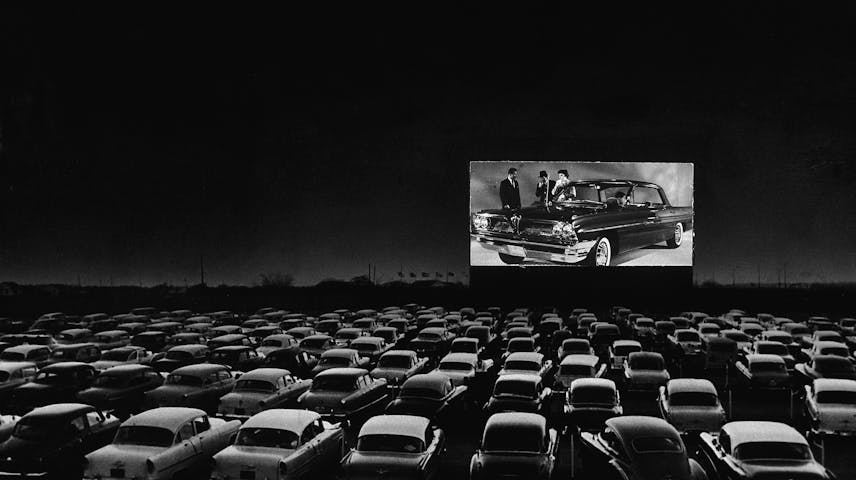
Drive-in movie theaters were pure magic. Rows of cars would park in front of a giant outdoor screen, tune into a special radio frequency (or use a clunky speaker that hooked onto the car window) and watch movies under the stars. At their peak in the late 1950s, there were over 4,000 drive-in theaters across the United States. They were a favorite hangout for teenagers looking for some independence—and maybe a little romance.
Greasers, Poodle Skirts and the Birth of Teen Culture
Before the 1950s, teenagers were basically just treated as small adults. But the post-war boom created something new: teen culture and social tribes. Kids had their own money, their own music and their own fashion—and they were not afraid to use them.
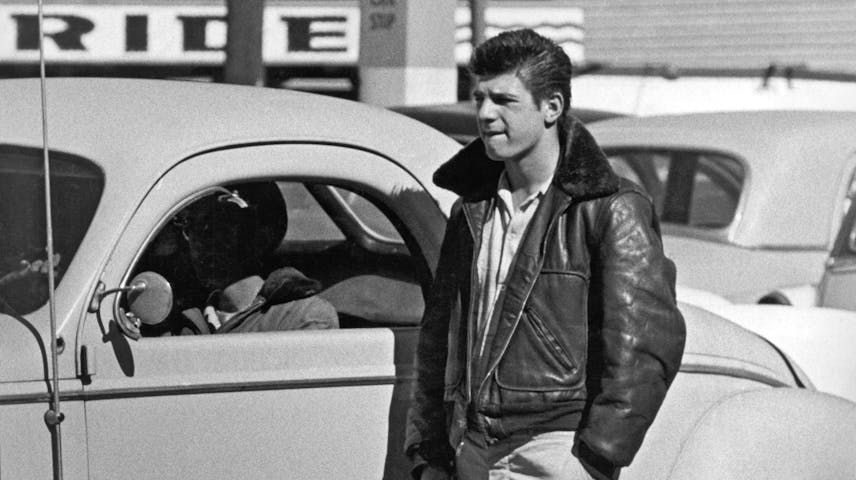
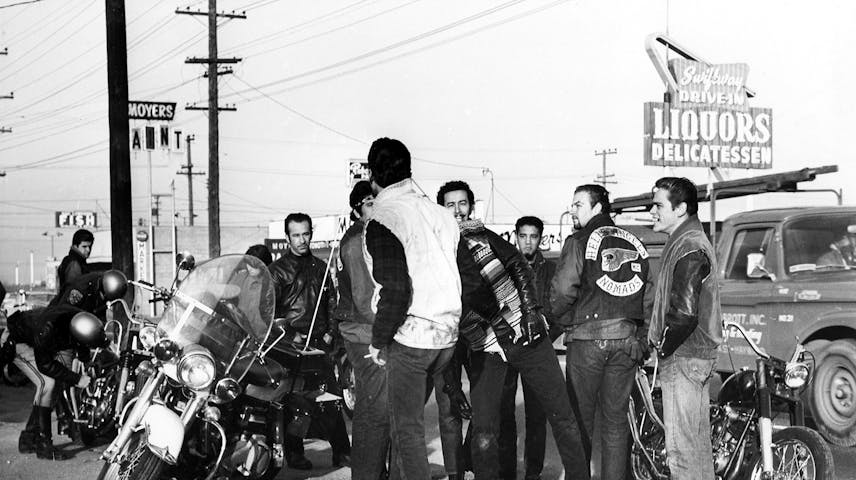
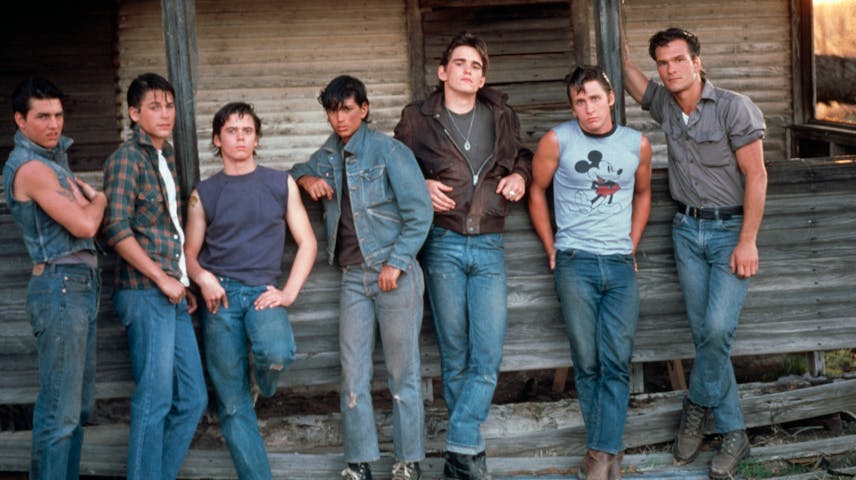
Two iconic looks defined the era. On one side were the greasers: young men (often working class) who slicked their hair back with pomade into ducktails and pompadours, wore leather jackets, tight jeans and boots and listened to rockabilly and early rock ‘n’ roll. Think Fonzie from Happy Days or the guys in Grease. They were seen as rebellious and cool—and a little dangerous.
On the other side were the Socs (short for Socials) or “squares”—teens who stuck to the mainstream look. Girls wore poodle skirts (wide, flouncy skirts with a poodle appliqué), saddle shoes and bobby socks. Boys wore letterman jackets, khakis, madras shirts, and penny loafers. These kids went to “sock hops”—school dances where they jitterbugged and twisted to the latest hits. This wealthier, "respectable" crowd drove their parents' nice cars and ruled the school social scene.
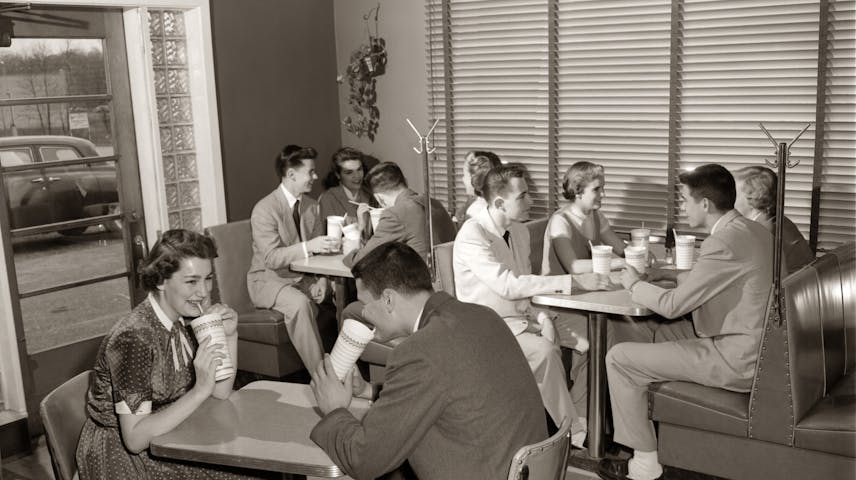
This golden post-WWII era hid brewing tensions that would soon explode into the Civil Rights Movement and the Women’s Movement, but for a few years after the end of the war, America seemed poised to embrace a picture-perfect and fun-filled future.