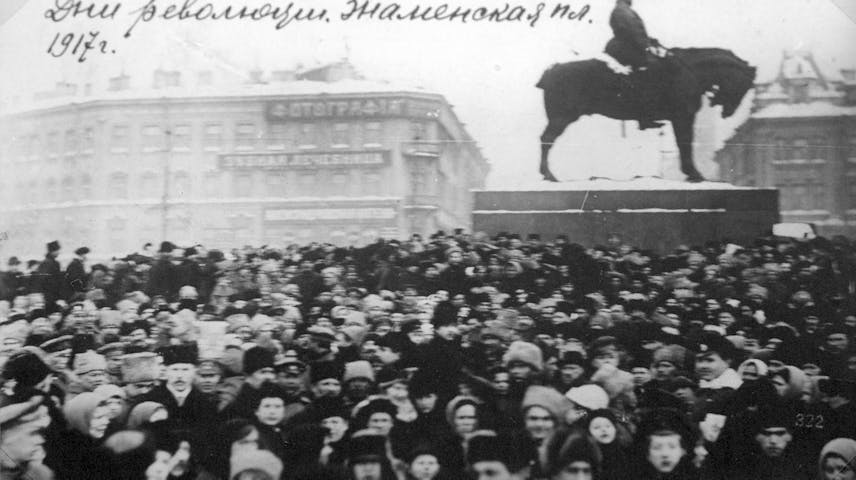
Russia in the early 1900s was a country full of tension. A powerful czar (emperor) ruled with an iron fist while millions of ordinary people lived in poverty. Workers had few rights, and anyone who spoke out against the government risked arrest. This pressure had been building for years, and when it finally exploded, it changed the world forever.
A Country Ready to Burst
Even before the chaos unleashed by the revolution in 1917, Russia was already a violent place. In 1905, government troops opened fire on a peaceful crowd of protesters in the capital city of St. Petersburg. That day became known as “Bloody Sunday,” and it sparked a mini-revolution across the country. Though the czar managed to hold on to power, the anger of the Russian people never went away.
Then came World War I (1914–1918). Russia was dragged into a massive, grinding conflict that it was not prepared to fight. Millions of soldiers died. Food became scarce. The public grew furious. The old system was crumbling.
Two Revolutions in One Year
In February 1917, the pressure finally broke. Massive protests swept through the capital (by then renamed Petrograd). Soldiers—who were supposed to shoot the protesters—joined them instead. Czar Nicholas II was forced to step down. Though the February Revolution was celebrated as a new beginning, it actually cost hundreds of lives in street violence.
A Provisional Government took over, but it made a fatal mistake: it kept Russia in the war. People were exhausted and hungry. They wanted the “peace, land and bread” being promised by a radical political group called the Bolsheviks, led by Vladimir Lenin.
In the fall of 1917, the Bolsheviks seized power in what is known as the October Revolution. They stormed the Winter Palace in Petrograd, where the Provisional Government was hiding, and were met with almost no resistance. The old government simply fell apart. The Bolsheviks, whose supporters were called the Reds, were now in charge—but even their grip on power was far from secure.
A Country Torn Apart: The Civil War
Taking over the government was one thing. Actually governing a huge country—one stretching across eleven time zones and filled with people who had very different ideas—was another.
Almost immediately, a bitter civil war broke out. On one side were the Reds (Bolsheviks). On the other were the Whites, a loose collection of groups that included supporters of the old monarchy, democratic politicians, military officers and others who opposed Bolshevik rule. The civil war lasted from roughly 1918 to 1921 and was one of the deadliest conflicts in Russian history, with millions dying from fighting, famine and disease.
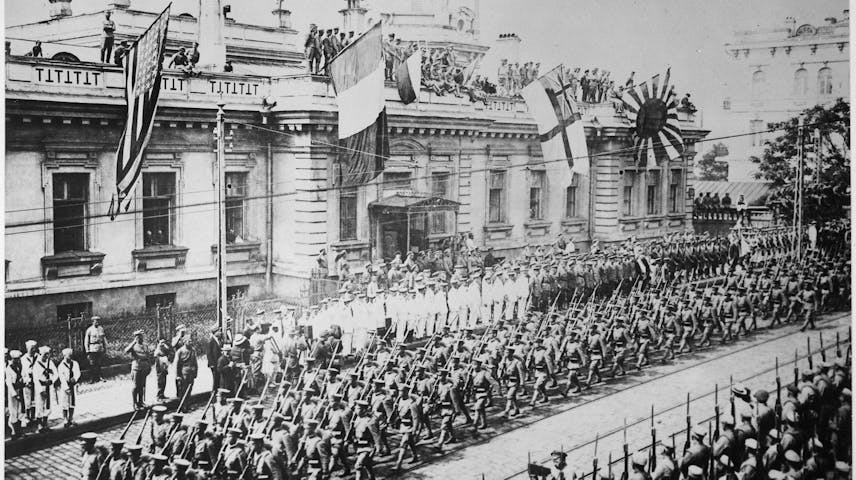
The Bolsheviks also faced threats from outside. Britain, France, Japan and the United States all sent troops to support the Whites, fearing the spread of Bolshevism—the communist idea that workers should rise up and control the government and economy. This foreign involvement allowed the Bolsheviks to claim they were defending Russia against outside enemies, which actually helped them gain support at home.
The Red Terror
With enemies on all sides, the Bolshevik government grew desperate and brutal. In September 1918, it officially launched what became known as the Red Terror, a campaign of mass arrests and executions aimed at crushing anyone who opposed Bolshevik rule.
The Red Terror was partly triggered by a violent event: on August 30, 1918, a woman named Fanny Kaplan shot and wounded Lenin. That same day, the head of the secret police in Petrograd was assassinated. The Bolshevik government responded with fury.
The secret police force, called the Cheka, was given sweeping powers to arrest, try and execute suspected enemies, often without a real trial. People were targeted not because of anything they had done, but simply because of what class they belonged to. Wealthy landowners, former government officials, military officers and members of the nobility were all considered “class enemies.” Tens of thousands were executed. Many more were sent to concentration camps—the early version of what would later become Stalin’s infamous gulags, or forced labor camps.
The Whites carried out their own campaign of violence, known as the White Terror, which also killed tens of thousands, including widespread massacres of Jewish people in Ukraine and other regions. Both sides committed terrible atrocities, and ordinary civilians were caught in the middle.
Why Did It Get So Violent?
First, the Bolsheviks believed that violence was unavoidable. Lenin argued that as long as society was divided between the rich and the poor, conflict was inevitable. He thought the only way to build a new society was to completely destroy the old one—by force if necessary.
Second, food shortages made everything worse. The war had disrupted farming across Russia. In the cities, people were starving. The Bolsheviks sent armed squads into the countryside to seize grain from peasants—often brutally. This created a kind of war between the city and the countryside.
Third, many different groups were fighting for control at the same time, not just the Reds and Whites. There were peasant armies, nationalist movements from non-Russian peoples, anarchist groups and foreign forces. The breakdown of order meant violence spread in every direction.
The Aftermath: A New Kind of State
By 1921, the Bolsheviks had won the civil war. But the country they now ruled was in ruins. Millions had died. The economy was shattered. Famine spread across vast regions.
The institutions the Bolsheviks built during this brutal period did not disappear. The Cheka (secret police) eventually became the KGB, the Soviet Union’s feared intelligence agency. The concentration camps expanded into the gulag system. The habit of silencing political opponents through fear and violence became deeply embedded in Soviet culture.
Lenin died in 1924. His successor, Joseph Stalin, took the machinery of terror that had been built during the revolution and civil war and used it on an even grander scale, killing millions of his own people during his campaigns to reshape Soviet society in the 1930s, 40s and 50s.
Why Does This Matter?
The Russian Revolution is one of the most important and consequential events of the 20th century. It showed how quickly a society can collapse when war, poverty and political failure come together. It also showed how, once violence becomes the main tool of government, it is very hard to stop.
The ideals that many revolutionaries started with—equality, justice, a better life for ordinary people—were buried under years of terror and suffering. Understanding this history helps us ask important questions: What happens when a government rules through fear? And what can ordinary people do to stop it?