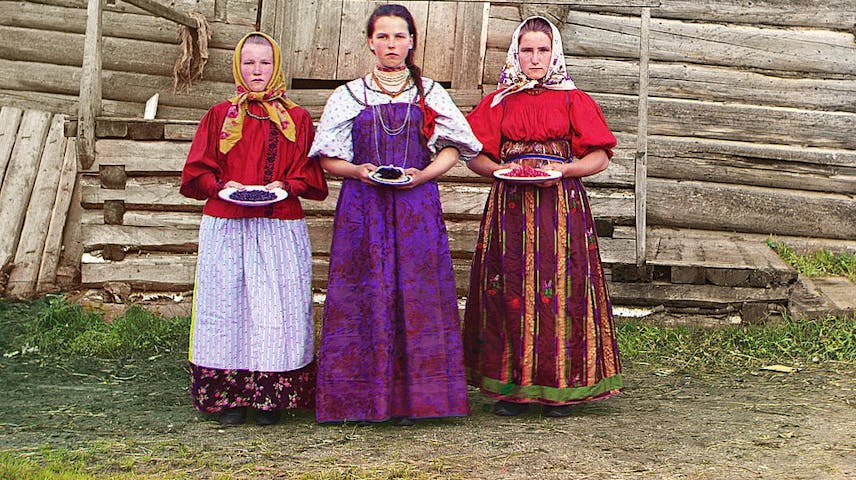
World War I began in 1914. By the eve of WWI, Russia had undergone rapid industrial development, much of it fueled by foreign investment and importing technology from Western Europe. Key industries included textiles, metal-working and chemical and oil production. At the same time, many people lived in appallingly backward conditions, especially in the countryside.
Sergei Mikhailovich Prokudin-Gorskii was a photographer. In the early 1900s, Prokudin-Gorskii formulated an ambitious plan for a photographic survey of the Russian Empire, and he documented the economic life of the empire in all its variety. He won the support of Czar Nicholas II. From 1909 to 1912, and again in 1915, he completed surveys of 11 regions, traveling in a specially equipped railroad car provided by the Ministry of Transportation. Czar Nicholas II gave him permits that granted him access to restricted areas and cooperation from the empire’s bureaucracy. Prokudin-Gorskii left Russia in 1918, after the Russian Revolution.
His subjects ranged from the medieval churches and monasteries of old Russia, to the railroads and factories of an emerging industrial power, to the daily life and work of Russia’s diverse population.
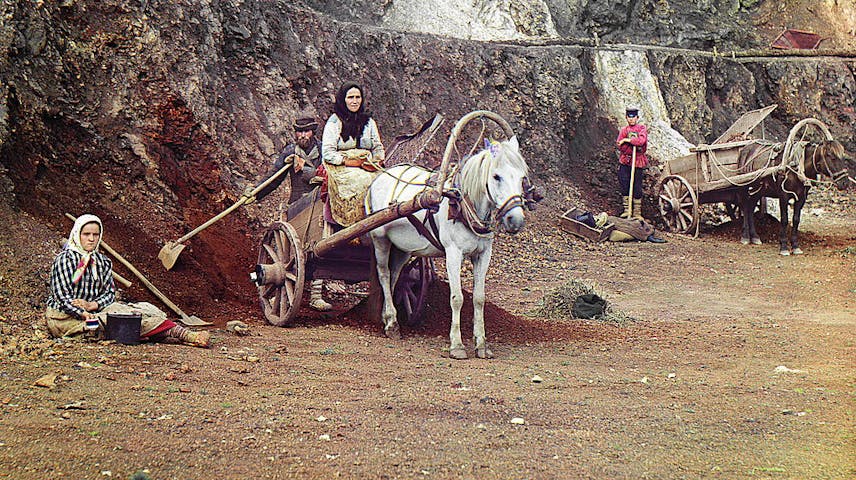
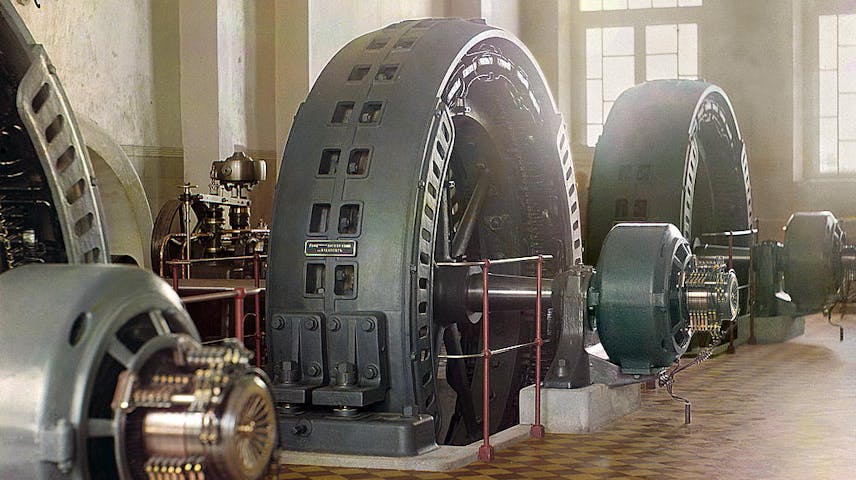
He photographed farmers cultivating fields and the production of grain in the temperate regions of European Russia. He took pictures of the harvesting of cotton, tea and other crops in the warmer regions of the south. And he captured artisans in small shops as well as large new factories equipped with the newest Russian and imported machines. Economic conditions in these same areas dramatically worsened during WWI, contributing to the growth of revolutionary movements and ultimately the overthrow of the czar and the destruction of the empire.
Ethnic Diversity
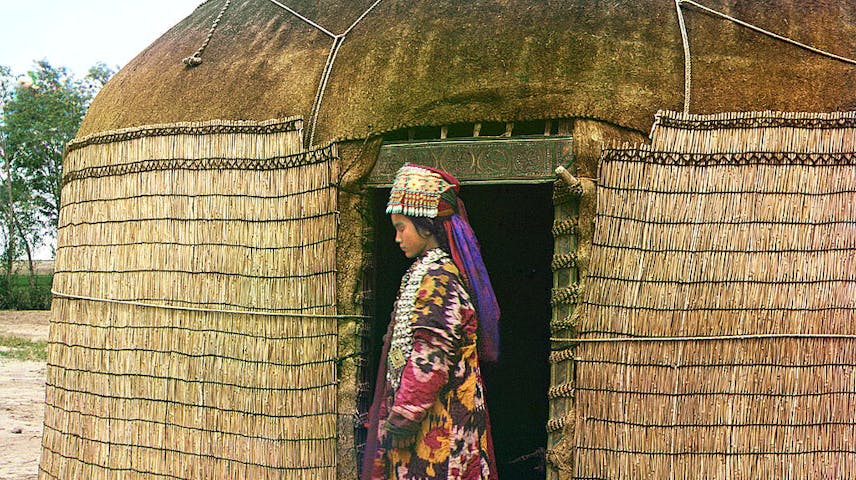
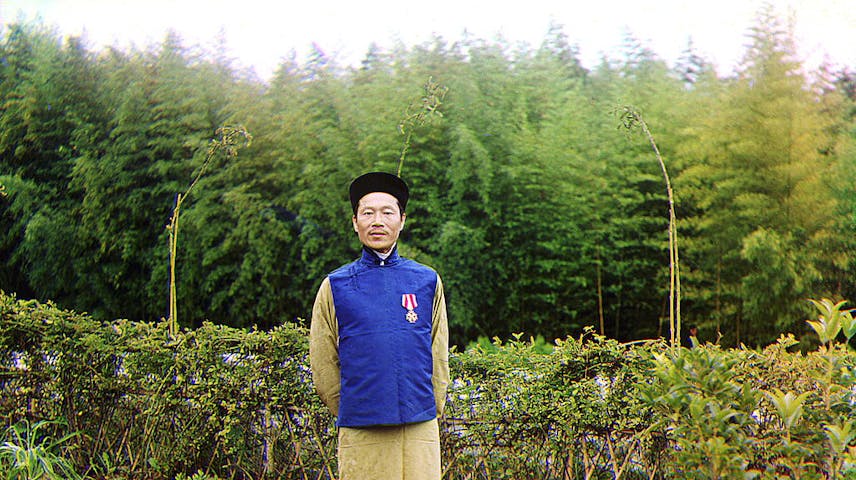
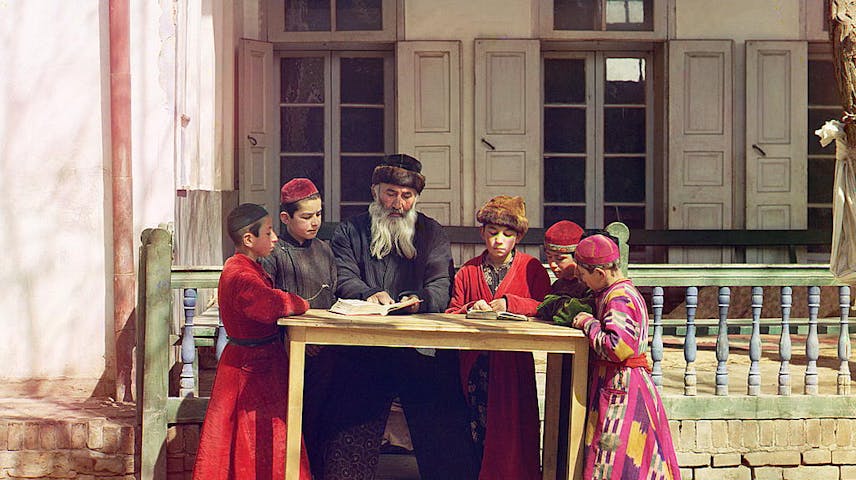
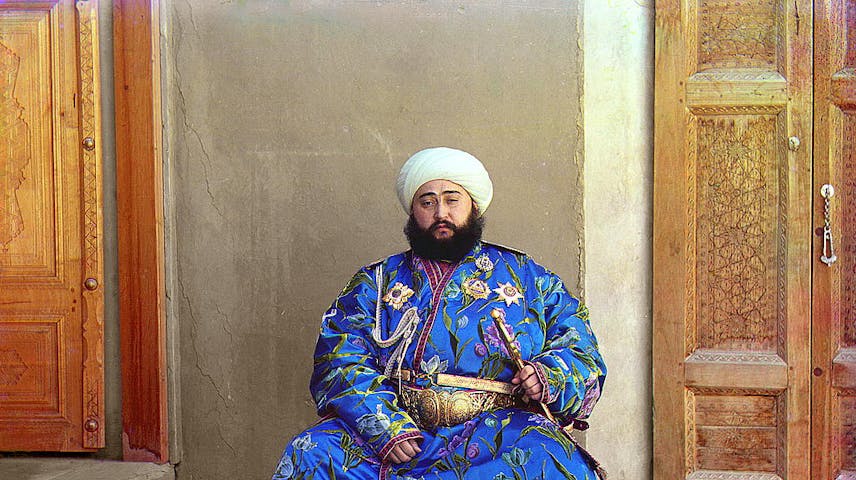
The Russia of Nicholas II on the eve of WWI was a land of striking ethnic diversity. It comprised all of the republics of what was later to become the Soviet Union. Present-day Finland and much of Poland were also part of the Russian Empire. Russia then was home to more than 150 million people—of which only about half were ethnic Russians. In his travels throughout the empire, Prokudin-Gorskii captured this diversity. His color photographs of peasants from rural Russia, the nomadic peoples of Central Asia and the mountain peoples of the Caucasus predate the forced Russification and the rapid modernization of the Soviet period, and they document traditional costumes and ways of life.
People at Work
Architecture
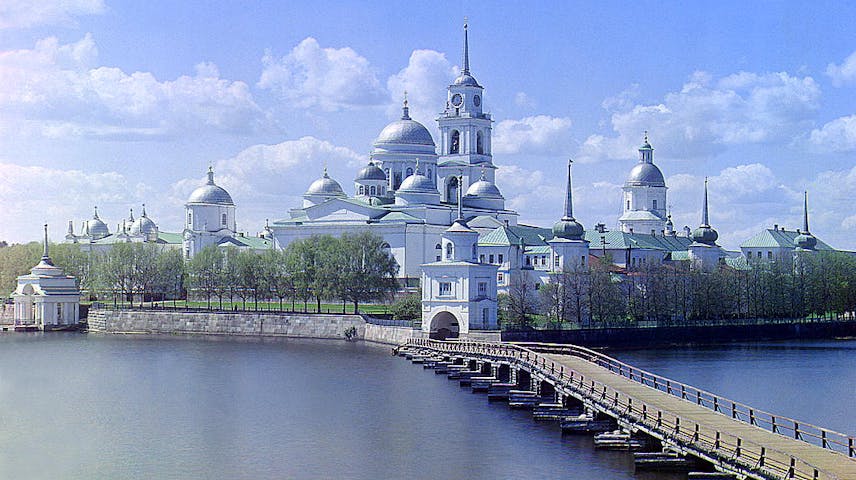
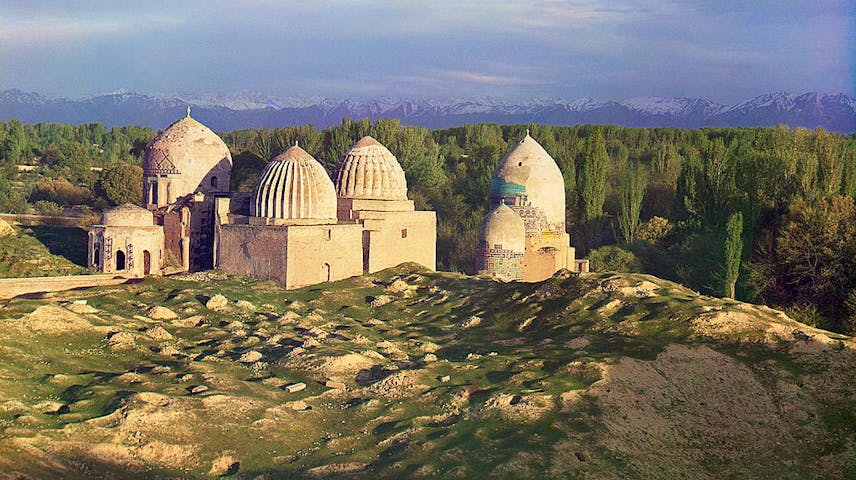
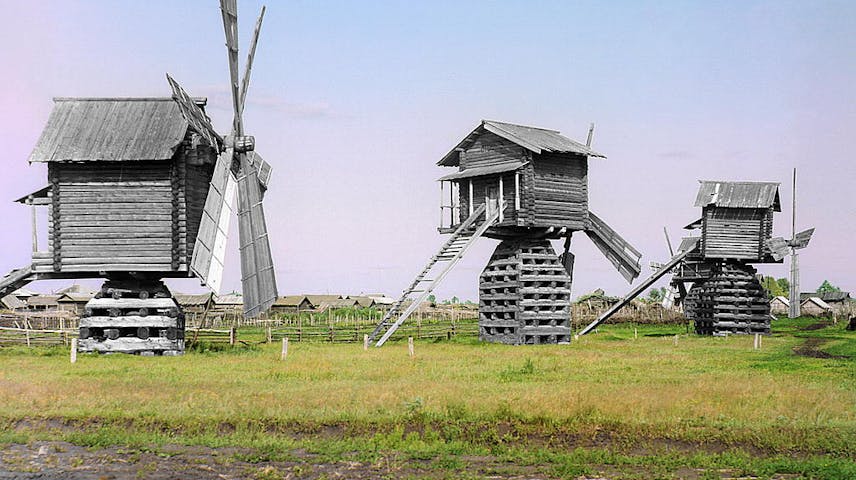
The architectural richness of the Russian Empire reflected its long history and the cultural, ethnic and religious diversity of its people. Prokudin-Gorskii photographed medieval churches and monasteries in European Russia. He also photographed mosques and Islamic schools in the Caucasus and Central Asia. Many of the buildings he photographed were later destroyed by war or revolution, but others survived the Soviet period and have been restored. In addition to religious buildings, Prokudin-Gorskii photographed houses, country estates, factories and barns.
Transportation
Prokudin-Gorskii’s many photographs of railroad bridges, locomotives, barges, steamers and canals reflect the importance of the transportation system in tying together the vast Russian Empire. The Ministry of Transport operated a network of railroads and steamers. However, private companies were also involved in rail, river and canal transport.
His first trip was to survey the Mariinsky Canal system linking the upper Volga and Neva rivers. He photographed bridges, dams, locks and steamers as well as the people who operated the system.
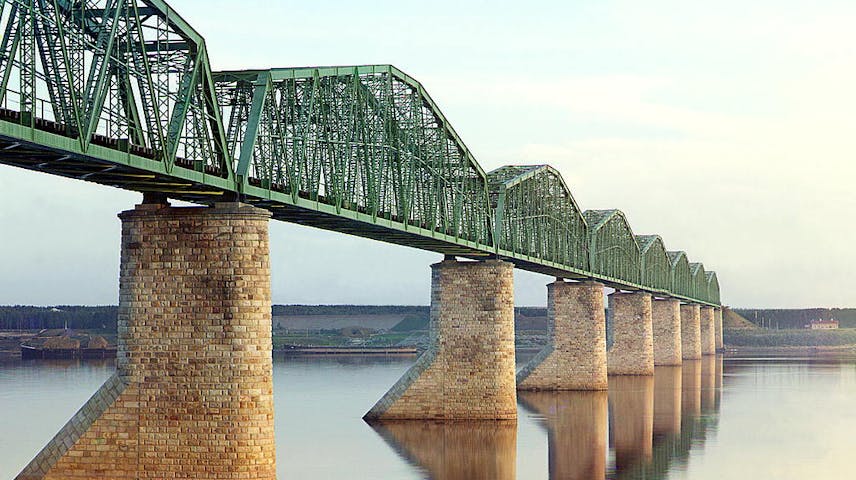
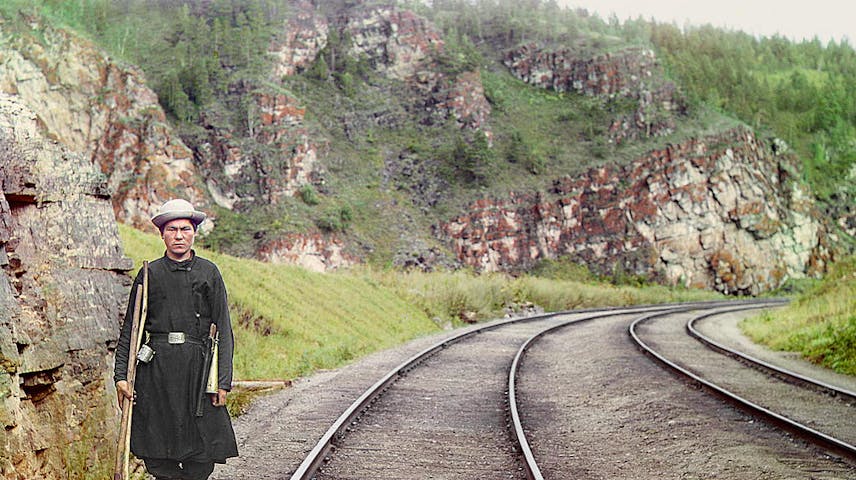
On subsequent trips, Prokudin-Gorskii documented the achievements of Russian engineers in extending the railroads across the rugged terrain of the Urals and into Siberia. Prokudin-Gorskii undertook his last assignment for the ministry during WWI. During WWI, he photographed the construction of the Murmansk Railway. It was built as a supply link between Russia and its French and British allies.