What Is Celadon?
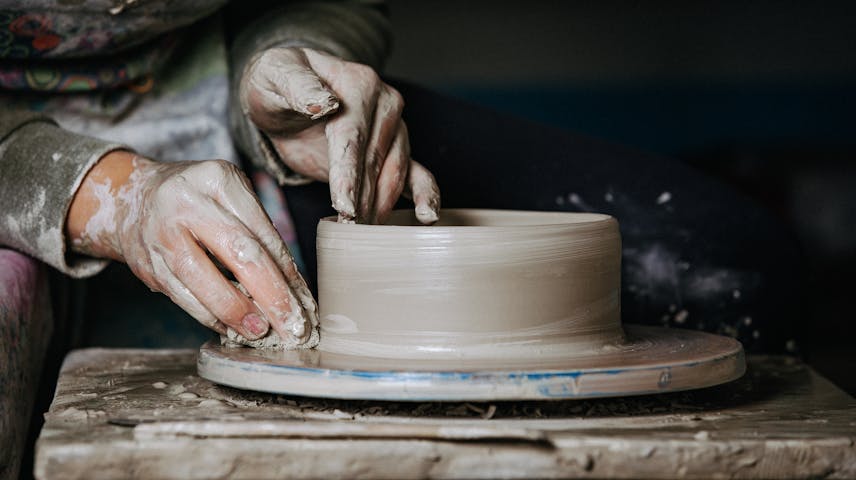
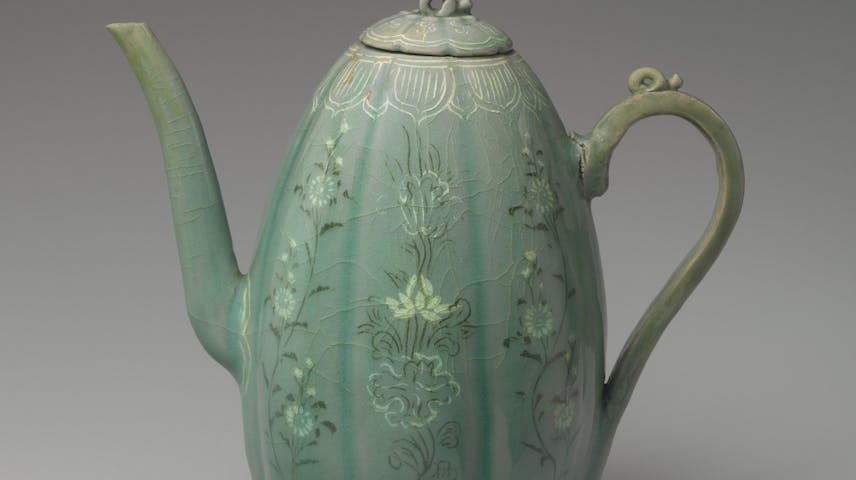
Celadon (pronounced sell-uh-don) is the name of both a color and a style of pottery featuring that color. During the Goryeo Dynasty, which lasted from 918 to 1392 C.E., Korean potters created some of the most beautiful ceramics the world has ever seen. Known for its dreamy gray-green glaze and striking inlays and etchings, celadon was originally made in China and brought to Korea. But over time, Korean artisans became the masters of it.
How Was It Made?
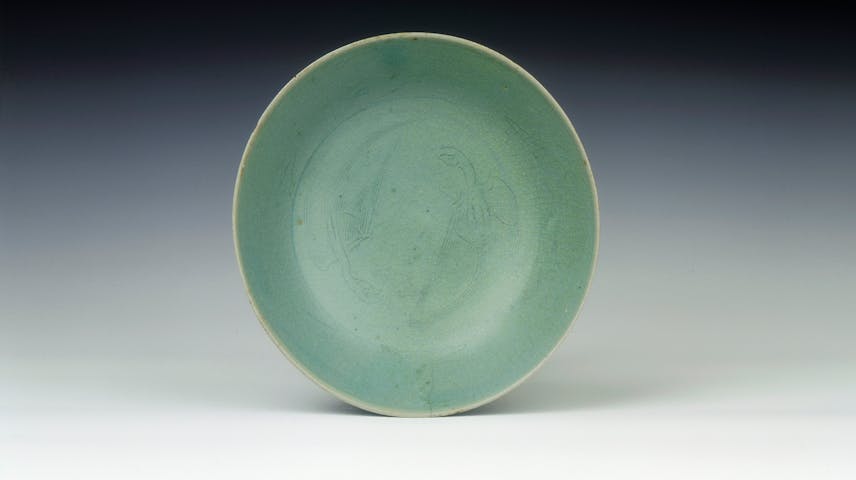
One secret behind celadon’s magical color was the glaze, the glassy coating applied before the pottery was fired in a kiln. Korean celadon glaze got its distinctive color from ingredients that included iron, manganese and quartz. Korean potters also discovered that by carefully controlling the temperature and the amount of oxygen inside the kiln, they could produce the prized blue-green color (Lee). This made it different from any previous Korean pottery, and it set it apart from the Chinese version from which it originated.
How Was It Decorated?
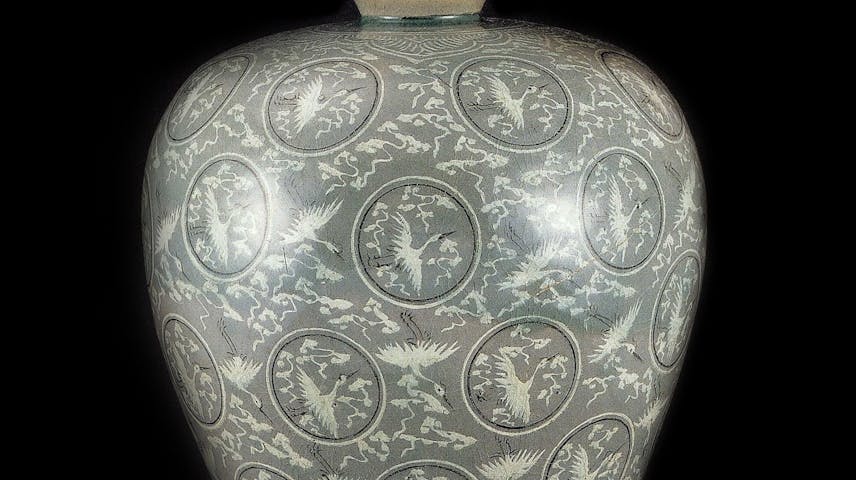
Goryeo celadon wasn’t just beautiful in color—it was also frequently decorated with incredibly detailed designs. Potters carved or pressed patterns of cranes, clouds, lotus flowers and vines into the clay before glazing it. Some pieces used a special technique called inlay. To do this, Korean artists filled carved grooves with white or black clay to create striking two-toned pictures. This inlay style was a Korean invention that potters in other countries tried hard to copy.
What Did They Make?
Goryeo potters shaped their celadon into all kinds of objects. They made tea bowls, vases, wine cups, incense burners, and even water droppers used for calligraphy. Some of the most famous pieces of celadon were melon-shaped bottles, pitchers and bowls. The curves were often decorated with delicate bamboo, bird or flower patterns.
Why Does It Still Matter?
Today, these pieces are displayed in museums around the globe and are considered national treasures of Korea. Not only are they a point of pride for the people of Korea, but they also serve as an example of its rich cultural history and as a reminder of the timelessness of beauty.