Loading...
Spark
Lesson 3: Allegory and Symbolism
California CCSS: Focus Standards
California CCSS: Supporting Standards
ELD Standards
In this lesson
Today you will
Analyze the development of theme in allegory, examining characters, actions, and events, and the symbolic meanings they represent.
Explain symbolic meaning and author’s message by using comparative language (represents, stands for, parallels), abstract nouns (arrogance, flattery), and explanation frames (“The character symbolizes . . . , which shows . . .”), supported by textual evidence.
Essential Questions
How do propaganda and rhetorical techniques influence what people believe and how they act?
Why do revolutions rise, and why do some end up betraying their own ideals?
Texts used in this lesson
Lesson Sequence
Think-Pair-Share
Directions: Follow the Think-Pair-Share routine and work with your partner to answer the questions:
How can a story influence what people believe or how they act, even if it never directly says, “This is the lesson of this story”?
What is an example of a story from your own background knowledge that might influence how people believe or act?
Learn the word allegory and read its definition:
allegory: a text like a story or poem or a visual image in which the characters, objects, and events are symbolic and, together, represent an underlying message, idea, or lesson
An allegory may seem like a simple story, but it communicates a universal message about human behavior or society. Instead of stating the message directly, the author uses characters, events, and conflicts to represent ideas about human behavior or society. When readers analyze allegory, they move from what happens in the story to what the characters, events, and conflicts represent.
Readers can analyze an allegory by asking themselves the following questions:
Who or what might these characters and events represent in the real world?
What larger idea or message is the author suggesting?
How does the conflict connect to real human behavior or how humans interact in society?
Learn the word symbolism and read its definition:
symbolism: using objects, colors, or characters to represent abstract ideas or emotions that build theme; authors often do this through repetition and emphasis
Check for Understanding |
|---|
List the words allegory and symbolism in your Personal Dictionary. Write the definition of each word. |
Part A: Analyze Theme Development in Allegory
Table Talk
Directions: Work with your small group to read two fables, which are a type of allegory. Then discuss the following questions. Use evidence from the text to explain what the characters and events represent. Remember that in an allegory, the characters, plot, and settings can symbolize emotions and abstract ideas. Add your ideas to the chart paper or a digital board.
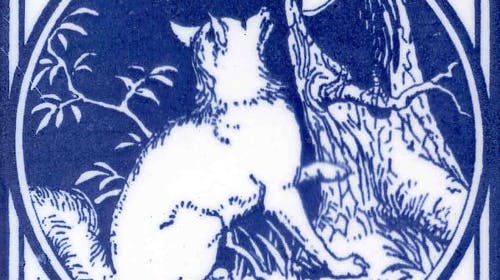
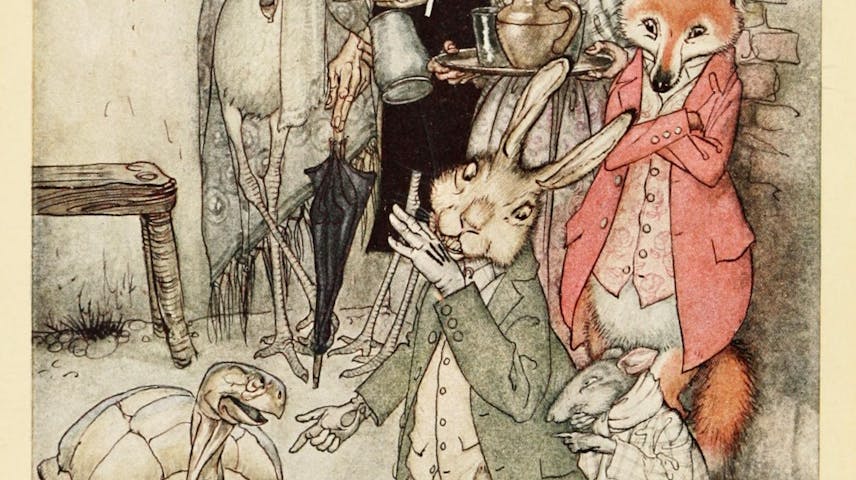
How do the characters act in “The Hare and the Tortoise”? What do their actions reveal about them? What kind of real-life person might each character represent? Give specific examples from the fable to support your ideas.
How do the characters act in “The Fox and the Crow”? What kind of real-life person might each character represent? Give specific examples from the fable to support your ideas.
What messages or lessons do these fables communicate about human behavior or actions? What details support this theme or message?
Part B: Evaluating Allegory as Persuasion
Four Corners Debate
Directions: A Four Corners Debate is a discussion activity where you take a position on a statement and support it with evidence. Each corner of the room represents a different viewpoint—Strongly Agree, Agree, Disagree, or Strongly Disagree. After choosing a corner, you will collaborate with peers to explain your reasoning, listen to other perspectives, and decide whether new evidence strengthens or changes your thinking.
Allegory can work like propaganda: it doesn’t just entertain. It pushes readers toward a belief about how people behave or how societies work. Choose a position about the following statement:
Allegories are more influential than direct propaganda.
Reflection |
|---|
Reflect on your ability to analyze the symbolic characters and events in an allegory using the Reflection routine.
|
Quick Write
Directions: Respond to the following prompt based on today’s lesson:
Identify one character or event from today’s allegories and explain in two to three sentences what real-world idea, issue, or type of person it might represent.