Loading...
Spark
Lesson 2: Building Background Knowledge: What Makes an American?
California CCSS: Focus Standards
California CCSS: Supporting Standards
ELD Standards
In this lesson
Today you will
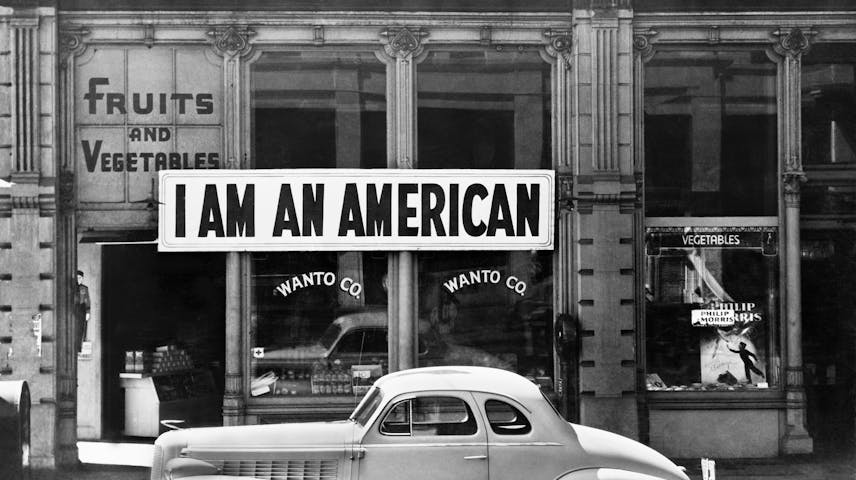
Consider the question “What makes an American?” in light of two visual appeals to Americanness: a sign put up by a Japanese American grocer in 1942 and a recruitment poster that predates the United States’ entry into World War II.
Analyze how public messages shape perception by interpreting two wartime images (“I Am An American” sign and Uncle Sam poster), using evidence-based language and cause/effect connectors (because, as a result, therefore) plus academic interpretation verbs (suggests, communicates, portrays) to explain how fear can influence how audiences understand “Americanness.”
Reflect on the many definitions that a political and geographic term such as American can have in different contexts.
Essential Questions
How do historical records (texts, images, and testimony) shape what is remembered about the past?
How can readers evaluate words and images for accuracy, perspective, and ethical use?
Texts used in this lesson

Lesson Sequence
Turn and Talk
Directions: Turn and talk with a partner to summarize what you learned from the article and photo set in the last lesson. Then, connect your ideas to this unit’s themes of visibility and exclusion. Use the guiding questions to support your discussion.
Who appeared in the photos of Americans on the “home front”?
Who was absent from those photos, and why?
What do these photos suggest about the American “home front” during the war?
Part A: What Makes an American?
Collaborative Idea Board
Directions: Think about the question: What makes an American? Share your ideas as we record them on a Collaborative Idea Board. As we build our ideas together, use the guiding questions to help you think more deeply and contribute to the discussion.
Do you have to be from America to be an American? Why or why not?
Are there values and beliefs that define Americans? Do you have to share those beliefs to be an American?
Can someone decide to stop being an American? How? Can others decide that someone is no longer an American?
Checklist |
|---|
As you participate in the discussion, make sure you:
|
Part B: Analyze Media
Directions: First, look at the two images from Spark Resource Set #2: the “I Am an American” sign (Oakland, CA, 1942) and the Uncle Sam recruitment poster (1940). As you view them, listen for important historical context that will help you understand each image.
Next, you will work in groups. Half of you will focus on the “I Am an American” image, and the other half will focus on the recruitment poster. With your group or partner, discuss the questions that follow:
Why was the image created?
Who was the intended audience of this image?
How does this image define “Americanness”?
What message about being “American” is shown in each image, and how are those messages similar or different?
Come back together as a class and share your group’s ideas. As you listen and compare responses, add any new or helpful information to your notes.
Reflection |
|---|
Reflect on your understanding of the selected images using the Reflection routine. |
Quick Write
Directions: Work in small groups to discuss the following questions. Then, write two to three sentences to respond, using details from your discussion.
What messages do these images send?
How might fear shape public perception of these images?