Loading...
Spark
Lesson 1: Building Background Knowledge: Korea
California CCSS: Focus Standards
California CCSS: Supporting Standards
ELD Standards
In this lesson
Today you will
Preview the anchor text, A Single Shard, and engage in a Jigsaw Reading to explore Korean history, culture, and geography to contextualize the setting of the novel.
Summarize and explain Korea’s historical context by using general academic nouns (such as tradition, community, and identity), incorporating connecting and transitional language (e.g., because, for example, as a result), and applying time and place prepositional phrases (such as “in Korea,” “during the Goryeo period,” and “on the Korean peninsula”) while sharing your jigsaw learning.
Essential Questions
What does it take to learn something difficult?
How does art connect people to their history and community?
Texts used in this lesson
Novel
A Single Shard
Linda Sue Park

Short-Form Text
From Ancient Beginnings to the Kingdom of Goryeo: An Early History of Korea
Standard News Bureau
Read text
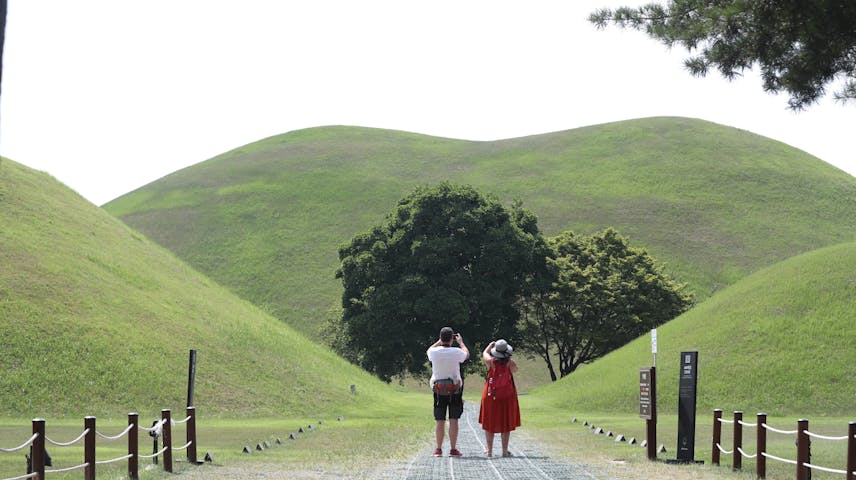
Short-Form Text
How Geography Shaped Korea: Land of Mountains, Rivers and Big Neighbors
Standard News Bureau
Read text

Short-Form Text
South Korea: A Land of Mountains, History and Culture
Standard News Bureau
Read text

Lesson Sequence
A Single Shard by Linda Sue Park is your anchor text for this unit. This novel tells the story of Tree-ear, a young orphan living in twelfth-century Korea who embarks on a journey to learn the craft of pottery. It is a work of historical fiction, a genre that blends fictional characters and plot lines with real historical settings, events, and, at times, people.
Stories written in third-person limited point of view are told by a narrator who is not a character in the story. The narrator uses words like he, she, and they to describe what is happening. Most of the time, the narrator shares the thoughts and feelings of only one character, but sometimes they may include more than one. In A Single Shard, the narrator shares the thoughts and feelings of the main character, Tree-ear. This helps readers feel closer to him and better understand what is happening in the story.
Turn and Talk
Directions: Turn and talk with a partner about the following question to prepare for today’s lesson.
What do you see, think and wonder as you review the cover and flip through the pages of A Single Shard?
Record your observations and questions in the I See, I Think, I Wonder graphic organizer. Then, turn and talk to discuss your thoughts and ideas with a partner.
Part A: Jigsaw Resources
Jigsaw Reading: Expert Groups
Directions: As you read, think about what the article says about Korean history, culture, and geography. Identify the central idea and list three key details the author uses to support this idea. Consider how these details are introduced, illustrated, or elaborated in the text. In your expert groups, collaborate through discussion and ask your peers questions to deepen your understanding of the text.
Answer the following questions:
What is the central idea of the article you read?
Which textual details about Korean history, culture, or geography help to convey the central idea?
Record your key takeaways in your group’s box on the Jigsaw Worksheet graphic organizer.
Reflection |
|---|
How confident do you feel in identifying main ideas and key details in an informational text? Choose a number between 1 and 5, with 1 being the least confident and 5 being the most confident, to rate your confidence level. Then write a few sentences that show how you go about identifying main ideas and key details of an informational text. |
Part B: Jigsaw Deep Dive
Directions: Return to your home group to share what you learned with your expert group. Work together with your home group to complete the remaining sections of the Jigsaw Worksheet graphic organizer.
Respond to the following questions.
Based on the texts you read, how do Korea’s geography, history, and community life help explain the connection between pottery and identity during the Goryeo period?
Based on your reading, what kind of community do you imagine Tree-ear might live in?
Pulse Check |
|---|
What do the central ideas and key details from the article suggest about the story’s setting? A. They suggest the story will likely center on a young person in a historical Korean village where pottery, trade, and community traditions shape daily life. B. They suggest the story will mostly take place in a modern city focused on factories and technology rather than traditional crafts. C. They suggest the story will focus mainly on jungle wildlife and survival instead of people’s work and cultural traditions. D. They suggest the story will take place in a place completely cut off from history, trade, or shared community practices. |
Think-Pair-Share
Directions: Use the Think-Pair-Share routine to discuss the following reflection question:
What did you learn about Korea today that was especially interesting to you? How might this new learning connect to the novel, A Single Shard?