Loading...
Spark
Lesson 3: Building Background Knowledge: Executive Order 9066
California CCSS: Focus Standards
California CCSS: Supporting Standards
ELD Standards
In this lesson
Today you will
Read Dwight Okita’s poem “In Response to Executive Order 9066” and compare its portrayal of Japanese American incarceration with Dorothea Lange’s photos from the period.
Interpret how Okita’s poem and Lange’s photographs bear witness to Japanese American incarceration by using comparative language (both, similarly, unlike), academic interpretation verbs (reveals, highlights, emphasizes), and source-transition language (In the poem . . . , In the image . . .) to connect imagery and visual details to the historic facts and impacts of EO 9066.
Consider the different meanings and parts of speech that the word witness can have, choosing the most relevant meanings to discuss Japanese American incarceration.
Essential Questions
How do historical records (texts, images, and testimony) shape what is remembered about the past?
How can readers evaluate words and images for accuracy, perspective, and ethical use?
Texts used in this lesson
Lesson Sequence
Directions: Think about the question: What does it mean to bear witness? Today, you will compare a short poem about Executive Order 9066 with images showing the forced removal of Japanese Americans.
First, brainstorm different meanings of the word witness. Share as many ideas as you can, and we will record them together.
Next, think about which meanings connect to historical injustices, like the incarceration of Japanese Americans. Then, work with a partner or small group to discuss and answer the following questions.
What does it mean to bear witness?
How can people bear witness to a historic injustice?
Whose responsibility is it to bear witness, and why?
Part A: Executive Order 9066
Turn-and-Talk
Directions: Based on our discussion, turn and talk to your partner to create a clear definition of bear witness, or use the definition provided. Add this term to your Key Terms and Topics graphic organizer.
Next, listen as we review key information about Executive Order 9066. As you listen, think about its impact and be ready to connect it to what you are learning.
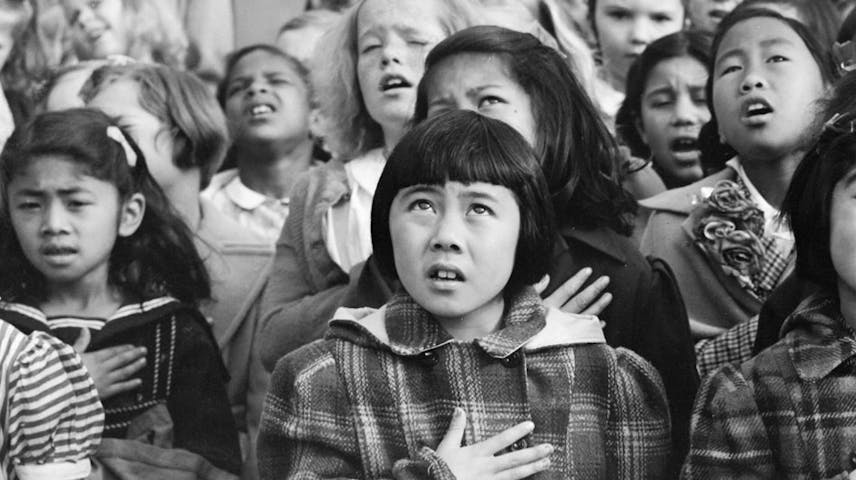
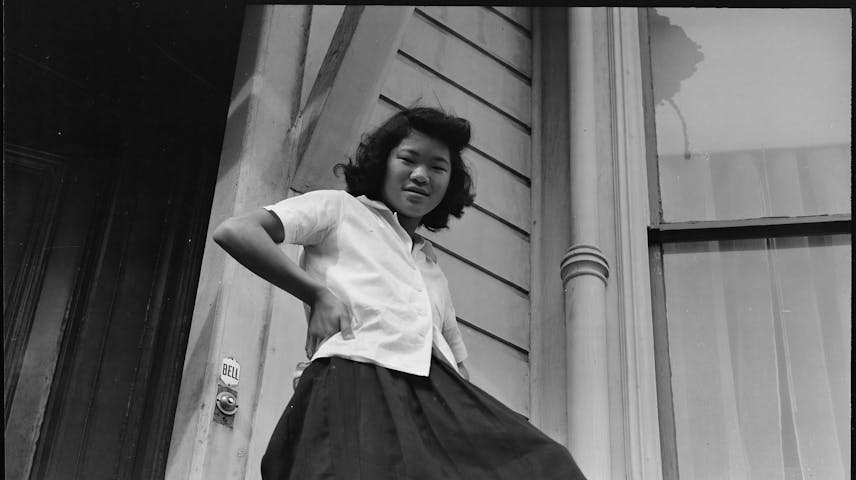
As a class, we will explore the poem, "In Response to Executive Order 9066" by Dwight Okita and the photo series “Exposing Injustice: Incarceration of Japanese Americans” by Dorothea Lange.
Follow along as the poem is read aloud. As you listen, pay attention to important details that show the harm caused by Executive Order 9066 and how it affected Japanese American individuals and families.
First, identify additional details from the poem and explain what they reveal about Executive Order 9066.
Next, look at the “Exposing Injustice” photo set. Use the same process to identify important details and explain what they show. As you work, focus on one or more of the photos that are closely connected to the poem’s topic.
If you choose to focus on other photos, note that some may include the term “Jap,” an anti-Japanese slur whose use was widespread during World War II. Consider acknowledging this term and explaining its derogatory nature.
Make sure you identify specific details that show:
how Japanese Americans—particularly Japanese American children—lived before the incarceration policy went into effect
how the incarceration policy affected children and families
Check for Understanding |
|---|
As you respond to the questions, make sure you:
|
Part B: Compare Media
Turn and Talk
Directions: After reading the poem and looking at the photographs, turn and talk with a partner about how the two are connected. Use the guiding questions to help you explain how each source relates to the unit’s main ideas and themes.
How do the photos and poem affect your understanding of who is “seen and unseen”?
What is one central idea about “seen and unseen” that both the poem and photos develop?
Whose perspective does the poem show? Whose perspective is evident in the photos?
What purpose do you think the author and photographer had in creating these works?
How do the poem and photos portray the experience similarly and differently?
Discuss the question and add any helpful information to your ongoing notes.
Whose stories are told in the text and images we examined today?
Reflection |
|---|
Reflect on your understanding of the poem and photographs using the Reflection protocol. How confident are you in your ability to:
|
Quick Write
Directions: Write two to three sentences to answer the question. As you write, think about how words and images can reveal things we might otherwise overlook.
What does it mean to witness someone’s story?