Loading...
Spark
Lesson 1: Genre Study: Poetry
California CCSS: Focus Standards
California CCSS: Supporting Standards
ELD Standards
In this lesson
Today you will
Interpret how structure and word choice distinguish prose from poetry and write a short poem about duality.
Use contrast language, first-person point of view, and concrete imagery to discuss and draft a poem about living between two worlds.
Essential Questions
What is blood, and how does it work as a symbol of both family ties and our shared humanity?
What is culture, and how does it shape our identity and sense of belonging especially when we move between more than one world?
Texts used in this lesson
Novel
Red, White, and Whole
Rajani LaRocca

Short-Form Text
Fish Cheeks
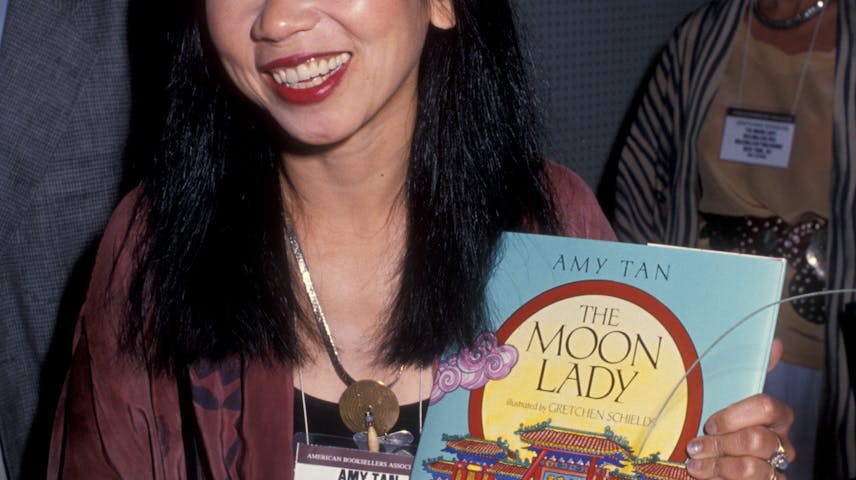
Amy Tan
Read text
Lesson Sequence
Think-Pair-Share
Directions: Take a moment to think of two or more roles that you fill in your life, such as being a big brother or sister, a player on a team, a student at school, or the leader of a group. Then, discuss the following question with a partner.
Do you feel and behave exactly the same in your different roles? What is the same? What is different?
Generating Situations, Context, and Examples
Directions: We are going to read and compare the poem “Two” and the beginning of the narrative “Fish Cheeks.” As we read, think about the ways they are similar and different.
What did you notice about the structure of this text? What did you notice about its theme?
What did the two have in common?
Directions: Look at the Venn Diagram labeled “Two” and “Fish Cheeks,” with cultural duality already written in the “both” section. With a partner, complete the diagram by comparing the texts, noting similarities and differences in structure, topic, tone, and other details.
Directions: Discuss these questions as you complete your Venn Diagram graphic organizer.
What tells you that “Fish Cheeks” is prose, not poetry?
How do the line breaks in the poem “Two” affect how you read the words?
Reflection |
|---|
Use the Reflection routine to reflect on your understanding of text structure by comparing two texts.
|
Check for Understanding |
|---|
Write a one- or two-sentence working definition of prose. |
Part A: Reading Poetry
Now that we have identified the characteristics of poetry, let’s take a closer look at the poem “Two.” We have already identified the theme of the poem: cultural duality for a young person who is both Indian and American.
Whole Group Discussion
Directions: Read the poem aloud, switching readers for each stanza. Pause after each stanza to briefly discuss the content, then take a moment to write your responses. Afterward, we will continue with a whole-class discussion.
Why does the poet start by saying, “I have two lives”?
What feelings about each “life” does the poet convey? How?
How does the poet use water as a symbol? How does the symbol of water change between the second and third stanzas?
What is the effect of the last stanza and especially the last line?
How does the genre or text type, poetry, help convey the poet’s feelings?
Pulse Check |
|---|
Which wording best shows a specific example of duality? A. I have two things in my life. B. I am different sometimes. C. I am loud in the cafeteria/quiet under the kitchen light. D. I have many events every day. |
Part B: Draft and Revise a Poem about Duality
Directions: You will write a short poem of your own called "Two," beginning with the line "I have two lives." First, you will jot down ideas in a Quick Write. Then you will shape them into a draft of at most 8 lines. Finally, you will work with classmates to revise and strengthen your poems.
Quick Write
Directions: Step 1: Quick Write In your Journal or Student Edition, begin with the line “I have two lives” and jot down phrases or lines about the idea of “Two.” (The “I” of the poem can be you or someone else in life or fiction.) You might write about:
A place that feels like home and a place that doesn't — or two places that both do
Two languages, two kinds of food, or two sets of rules
Two roles you play
Try to think of at least one specific image, sound, smell, taste, or feeling.
Step 2: Shape (a few minutes) Your Poem. Use your Quick Write to now turn your words into poetic form, focusing on one type of duality. Remember: It should begin with the line “I have two lives,” and have no more than 8 lines.
As you draft:
Select one specific image, sound, or other sense memory that seems strong or interesting
Develop another image, sound, or sense that contrasts with it
Consider where to break lines to emphasize what is strongest or most important
Rehearse & Refine
Directions: In groups of three, read your poem aloud twice. The first time, listeners just listen. The second time, listeners use the Peer Feedback Form to jot one line that clearly shows duality and one word they want to hear more about. Then the writer chooses one line to revise.
What is one line you might revise after hearing your poem aloud?
Quick Write
Directions: Today, you learned that poets make meaning with line breaks, images, and carefully chosen words. Later in this unit, you will analyze how other poems in Red, White, and Whole use imagery or symbolism to show important connections. The poem you started writing today is practice for making those same craft choices on purpose.
Which word, phrase, or image helped you show two sides most clearly today, and how will that help you in the unit performance task?