Loading...
Spark
Lesson 1: Racing to the Moon
California CCSS: Focus Standards
California CCSS: Supporting Standards
ELD Standards
In this lesson
Today you will
Cite textual evidence to explain the scientific and mathematical challenges NASA aimed to solve and evaluate reasons supporting the push for the moon mission.
Explain historical and scientific context using cause-effect transitions and domain-specific vocabulary in discussion and brief summary writing.
Essential Questions
How do curiosity, evidence, and collaboration lead to discovery?
How can research help us uncover lesser-known contributions and tell a more complete story?
Texts used in this lesson
Short-Form Text
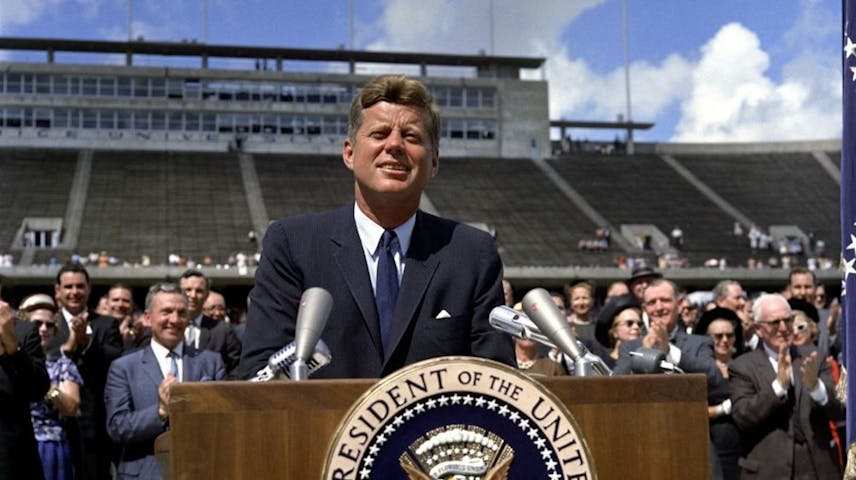
John F. Kennedy’s Speech: “We Choose to Go to the Moon”
Original speech from the public domain, adapted by Newsela staff
Read text
Short-Form Text
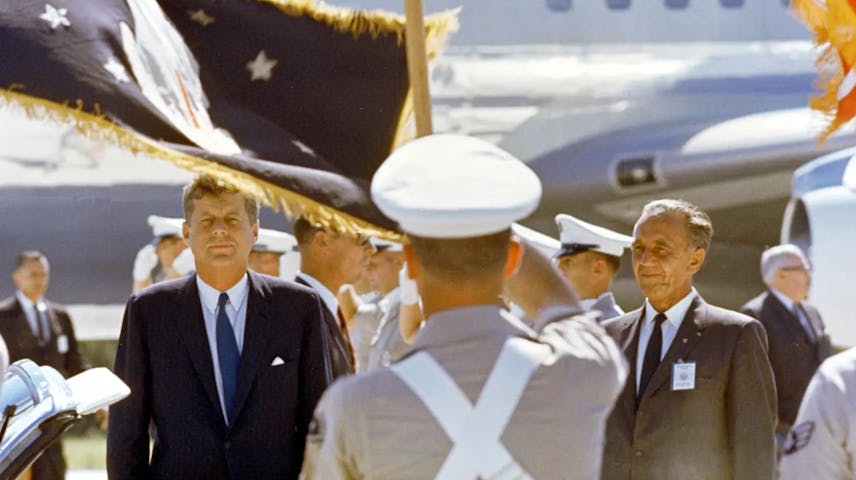
The 1960s: From Dream to Reality in 10 Years
Cheryl L. Mansfield, NASA Kennedy Space Center
Read text
Short-Form Text
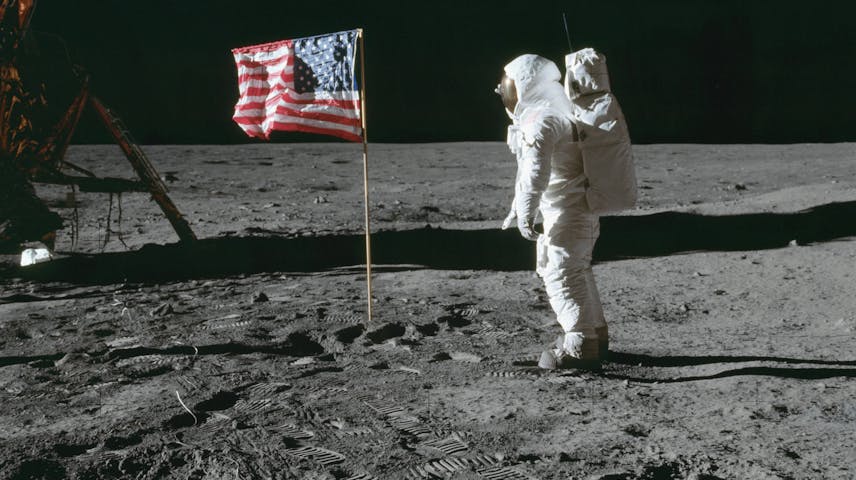
The Space Race: America Reaches for the Moon
NASA and the National Park Service, adapted by Newsela
Read text
Lesson Sequence
Think-Pair-Share
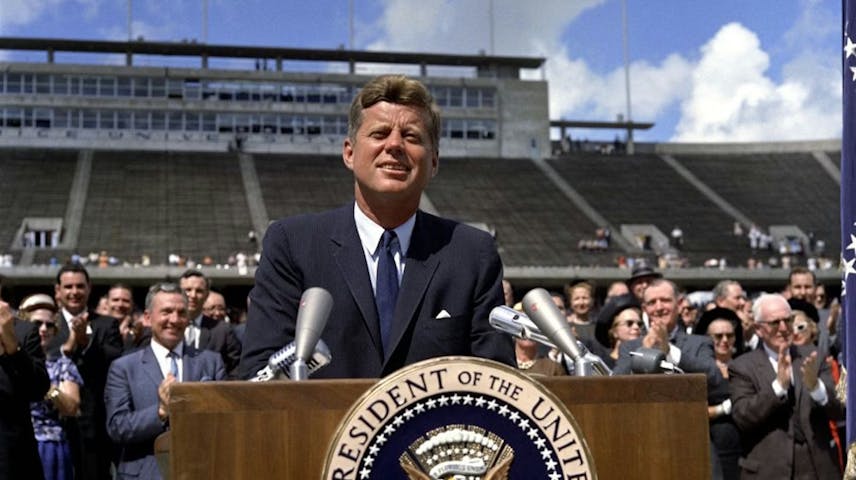
Directions: In this unit, we will explore the Space Race. This was the Cold War competition between the United States and the Soviet Union, a country that included Russia and 14 other republics, to be the first to land on the moon. During this time, success in space became a symbol of scientific strength and global leadership. Today we will investigate why this mission felt so urgent and what problems scientists needed to solve.
What are your observations, impressions and questions regarding the image?
Why might a country spend a lot of money, time, and talent on space exploration during an international rivalry?
Building academic words for big ideas
Directions: When historians and scientists explain big events, they often turn action words into idea words or abstract nouns. For example, if I start with the verb innovate, I can change it to the noun innovation, which helps me use academic language to talk about the whole idea instead of just one action. I can also change collaborate to collaboration, which is an effective word to use in academic discussions and writing. If I want to describe unfair treatment as a system, I can turn discriminate into discrimination. Today, these noun forms can help us explain why NASA depended on innovation and collaboration to solve problems—and later in the unit, how discrimination often determined who received recognition.
Which abstract noun best completes this sentence? The Space Race pushed scientific ______ across the United States.
Part A: The Space Race: Jigsaw Reading
Jigsaw Reading: Expert Groups
Student 1: “The 1960s: From Dream to Reality in 10 Years”
Student 2: “John F. Kennedy’s We Choose to Go to the Moon” speech transcript
Student 3: “The Space Race: America Reaches for the Moon”
Directions: Each expert group will read one short text and will respond to questions together that will help you understand more about the Space Race. Use the Jigsaw Worksheet to record key ideas and details about the text. Remember, when you return to your home group, you will teach everyone about your text by sharing the most important ideas. Once everyone in the group has shared their text, work with group members to see how ideas in each of the texts connect. Use the Jigsaw Worksheet to record short notes about your text and the connections during the discussion with your expert group.
Reflection |
|---|
|
Part B: The Space Race: Jigsaw Deep Dive
Jigsaw Deep Dive
Directions: With your expert group, discuss your responses to the questions. Use this discussion to identify each text’s claim, reasons, and evidence about why the Space Race mattered. Ask thoughtful questions, respond with relevant evidence, and listen closely to your classmates while building on the ideas they share. Take notes on the Jigsaw Worksheet.
What claim does your text make about why the Space Race mattered? What reason or evidence supports that claim?
What evidence shows why mathematicians, engineers, or human computers were necessary to solve NASA’s problems?
What reason or evidence does your text give to show that the Space Race was part of the Cold War competition, not just a “science project”?
Return to your home group. Each speaker has one minute to teach the claim from their text, one reason that supports it, and one strong piece of evidence. As you listen, add at least one new idea from each text to your Jigsaw Worksheet.
Across the three texts, what central idea do you notice about why the Space Race mattered so much?
Which reason in Kennedy’s speech do you think most strongly supports his claim that the moon mission was necessary?
What makes that reason convincing?
Pulse Check |
|---|
Which statement best evaluates how the texts support the idea that the Space Race had high stakes? A. The Space Race mainly mattered because people wanted more entertainment and television coverage. B. The Space Race mattered because success in space could demonstrate national strength and push the country to solve difficult scientific problems. C. The Space Race mattered only to astronauts because they were the only people directly involved in the missions. D. The Space Race was mostly a peaceful hobby for scientists with no connection to politics. |
Quick Write
Directions: In 2–3 sentences, explain the strongest reason the Space Race felt urgent and support your explanation with evidence from at least two texts. Use at least two specific details from two different texts, include at least one cause-effect transition, and at least one domain-specific word.