Loading...
Spark
Lesson 1: Conditions for Revolution
California CCSS: Focus Standards
California CCSS: Supporting Standards
ELD Standards
In this lesson
Today you will
Learn about the concept of political revolution by examining the conditions and problems that led to the Russian Revolution through a gallery walk activity.
Explain causes of revolution using visual evidence by using cause–effect connectors (because, leads to, results in), descriptive academic language (inequality, oppression, instability), and evidence-based explanation frames (The image shows . . . , This suggests . . .).
Essential Questions
How do propaganda and rhetorical techniques influence what people believe and how they act?
Why do revolutions rise, and why do some end up betraying their own ideals?
Texts used in this lesson
Short-Form Text
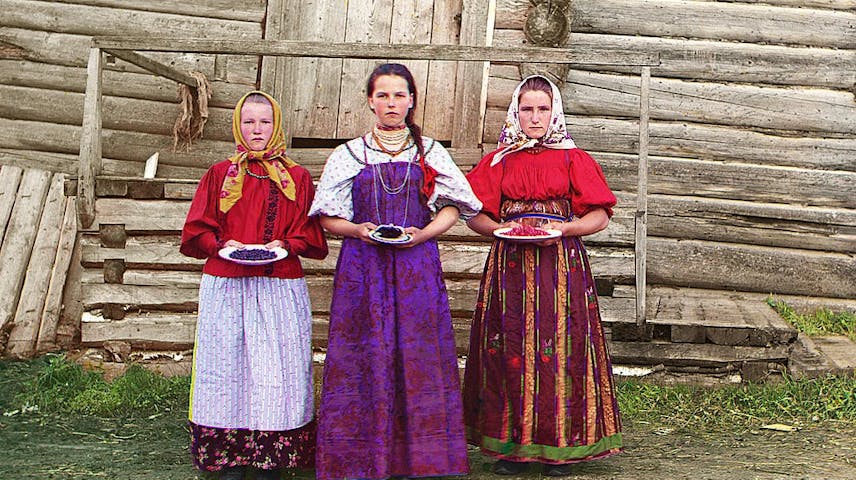
Photographs of Pre-Revolution Russian Empire
Library of Congress, adapted by Newsela
Read text
Lesson Sequence
Turn and Talk
Throughout history, societies have experienced moments of dramatic change. These moments often begin when people believe the current system is unfair or no longer meets their needs. When large collective groups push for major political or social change, a revolution can occur.
Directions: Learn how these ideas help you understand how movements grow and how power can change during revolutions.
Revolution is a major and often sudden change in a political or social system, usually driven by people who want to replace the existing power structure.
Turn and talk to discuss what you already know about revolutions.
What revolutions have you heard of before? What have you learned previously about revolutions?
Read these statements and think about what conditions might cause people to seek large-scale change like a political revolution.
“Revolutions are the locomotives of history.” Karl Marx
“A social movement that only moves people is merely a revolt. A movement that changes both people and institutions is a revolution.” Dr. Martin Luther King Jr.
“Those who make peaceful revolution impossible will make violent revolution inevitable.” John F. Kennedy
Turn and talk to discuss these questions:
What ideas about revolution are being expressed in each quotation?
What common problems or conditions might lead to a revolution as it is being described in these quotations?
Check for Understanding |
|---|
List the word revolution in your Personal Dictionary. Write your definition of the word, and provide an example of a revolution from history. |
Investigating the Causes of the Russian Revolution
Introduction to the Russian Revolution
Directions: Read the investigation questions and background information about life in Russia before the Russian Revolution.
Investigation 1: How do propaganda and rhetorical techniques influence what people believe and how they act?
Investigation 2: Why do revolutions rise—and why do some end up betraying their own ideals?
Background Information
In 1917, Russia had an absolute monarch who ruled over the people. This monarch, named Tsar Nicholas II, did not take good care of his people.
An absolute monarch is a ruler who has complete and unrestricted power over their country and their people.
At the time, there were major economic and social issues. There was a huge gap between the rich and the poor. And the peasants and industrial workers often faced low wages, poor working conditions, and a lack of access to land.
Another factor during this time is that Russia is involved in World War I. There are lots of men losing their lives, and the people at home are facing food shortages because of the war.
And Tsar Nicholas II refused to implement reforms to support his people. He was allowing many of his people to starve because he did not want to make any changes to the government.
Gallery Walk
Use the Notice, Wonder, Connect graphic organizer.
With your group, closely examine each image and record observations in your Notice, Wonder, Connect graphic organizer. Focus on details that connect to the background information about the Russian Revolution previously discussed. Use the questions below to guide your thinking:
What economic or social conditions do you notice across these images?
How might these conditions have influenced how the Russian people felt about their government or society, and why might those feelings lead to a revolution?
Reflection |
|---|
Reflect on your ability to explain the conditions that led to the Russian Revolution using the Reflection routine.
|
Quick Write
Directions: Review your Notice, Wonder, and Connect graphic organizers. Respond to the following prompt based on this lesson’s learning:
Choose one visual detail from the gallery walk. Explain how that specific piece of evidence helps you understand why the Russian Revolution happened.