A Time Like No Other
The 1960s was one of the most exciting and turbulent decades in American history. It began full of hope and ended in anger and exhaustion. During those ten years, Americans debated big questions: Who deserves to be treated equally? Is this war worth fighting? What kind of country do we want to be? The answers to those questions—and the battles fought over them—changed the United States forever.
The Fight for Civil Rights
What Was Segregation?
Segregation means forcibly keeping different groups of people apart. In the early 1960s, many states, especially in the South, had laws requiring Black Americans and white Americans to use separate schools, restaurants, restrooms, buses and more. These “separate” facilities for Black people were almost always worse. This was a form of discrimination, which is the unfair treatment of people based on who they are, such as their race.
Sit-Ins and Freedom Rides
The Civil Rights Movement had been building for years, but in 1960 a new, bolder phase began. On February 1, four Black college students walked into a Woolworth’s lunch counter in Greensboro, North Carolina, sat down and politely asked to be served. The counter was for white customers only. They were refused service—but they did not leave. This simple, brave act of protest was called a sit-in, and it sparked a wave of similar protests across the South. By late 1961, nearly 70,000 students had taken part in sit-ins to desegregate restaurants, libraries, churches and movie theaters.
Around the same time, groups of Black and white activists called Freedom Riders boarded interstate buses and rode through the South to challenge segregation in bus terminals. They were met with violent attacks from angry mobs, but their courage—captured on television cameras—shocked many Americans and drew national attention to the injustice they were fighting against.
School Integration
One of the most contested battlegrounds of the civil rights movement was the American school system. School integration means ending the practice of having segregated, or separate, schools for Black and white students. Although the Supreme Court had declared segregated schools unconstitutional in 1954 (Brown v. Board of Education), many schools across the South still refused to integrate. Throughout the 1960s, Black students who enrolled in previously all-white schools were often met with hostility and threats. Federal troops were sometimes called in to protect them. The slow, painful process of school integration continued throughout the decade, as courts, governments and communities wrestled with how to make equal education a reality.
Birmingham and the March on Washington
In 1963, civil rights leader Dr. Martin Luther King, Jr. organized peaceful marches in Birmingham, Alabama, one of the most segregated cities in the country. Birmingham’s police commissioner, known as “Bull” Connor, responded by turning fire hoses and police dogs on the protesters, including children. When these images appeared on television, millions of Americans were horrified.
President John F. Kennedy, moved by the public outcry, proposed a sweeping civil rights bill. To pressure Congress to pass it, roughly 250,000 Americans gathered in Washington, D.C., in August 1963, in what became known as the March on Washington. There, Dr. King delivered his famous “I Have a Dream” speech, calling for a nation where people would be judged “not by the color of their skin, but by the content of their character.”
The Civil Rights Act and the Selma Demonstrations
Kennedy was assassinated in November 1963, and President Lyndon B. Johnson took over. Johnson pushed Congress to pass the Civil Rights Act of 1964, which made it illegal to discriminate based on race in public places, in jobs and in programs funded by the government. It was the most powerful civil rights law in U.S. history.
But Black Americans still faced another huge barrier: voting. In many Southern states, unfair rules, like literacy tests (tricky reading tests given only to Black voters), were used to prevent Black people from registering to vote. As a result, only 3% of Black Americans were registered to vote in the American South.
Civil rights marchers set out to protest this in Selma, Alabama in March 1965. When peaceful marchers crossed the Edmund Pettus Bridge, state troopers attacked them with clubs and tear gas. The brutal images once again shocked the nation. President Johnson responded quickly, and Congress passed the Voting Rights Act of 1965, which outlawed the unfair barriers that had kept Black Americans from the polls. The number of Black registered voters grew dramatically in the years that followed.
Was It Enough?
The new laws changed a great deal, but they did not solve everything. Economic inequality—meaning that some groups of people have far less money, opportunity and wealth than others—remained a serious problem. Black unemployment and poverty stayed disproportionately high. Many Black Americans lived in poor city neighborhoods called ghettos, where conditions barely improved. Frustration boiled over into a series of urban riots in cities across the country during the mid-1960s.
Still, the civil rights movement inspired other groups who felt their rights were also being ignored. Women, Latin Americans, Native Americans and gay Americans all pointed to the civil rights movement as a model and began organizing for their own equal rights.
The Vietnam War
How the U.S. Got Involved
Far away in Southeast Asia, a war was being fought between communist North Vietnam and non-communist South Vietnam. The U.S. government feared that if South Vietnam fell to communism, other nearby countries would become communist, too, an idea called the “domino theory.” Presidents Eisenhower, Kennedy and Johnson all sent American troops to help South Vietnam.
By 1968, more than 500,000 U.S. troops were fighting in Vietnam. The war was costly in every way—in lives lost, in money spent and in national unity.
Why So Many Americans Opposed the War
Many Americans, especially young people, believed the war was a mistake, or even morally wrong. Graphic television footage showed the horrors of battle. In early 1968, North Vietnam launched a massive surprise attack called the Tet Offensive. Although U.S. forces pushed it back, the scale of the assault made many Americans question whether the war could ever be won.
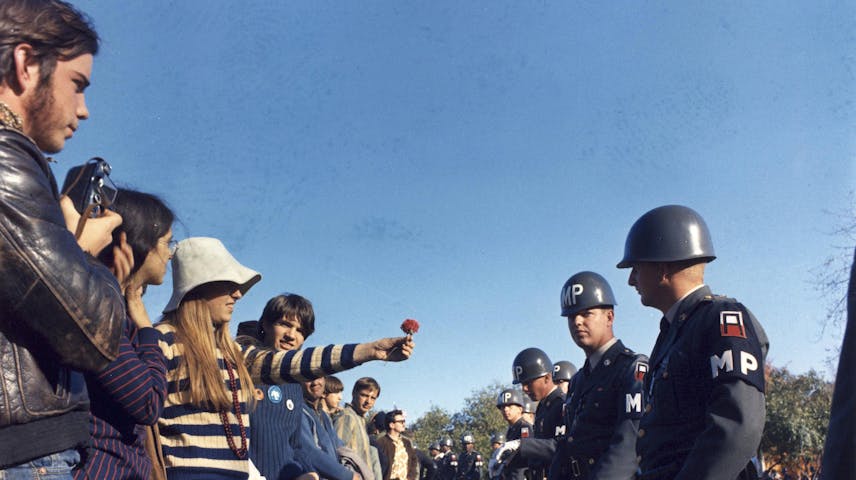
Anti-war protests spread across the country, particularly on college campuses. Students marched, held rallies and organized demonstrations. Some burned their draft cards in public as a statement of their refusal to fight. The anti-war movement put enormous pressure on the government and helped convince President Johnson not to seek re-election in 1968.
Youth Subcultures and the Counterculture
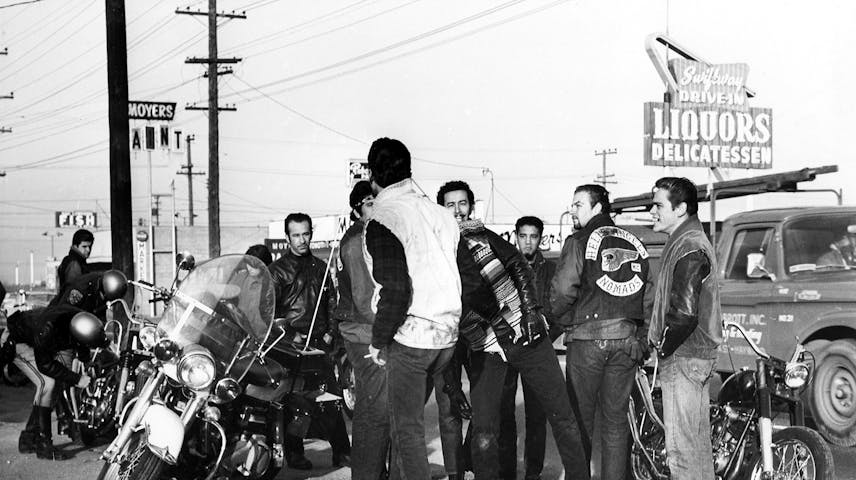
Not every young person protested with signs and speeches. Many expressed their dissatisfaction with American society through culture itself. This became known as the counterculture, a movement that rejected many traditional values of American life, like conformity, consumerism and strict social rules.
Young people in the counterculture (often called “hippies”) wore unconventional clothing, grew their hair long, listened to rock music and preached the values of peace and love. They questioned authority and imagined a different, freer way of living. Rock music became the soundtrack of the generation, and artists like Janis Joplin and the Grateful Dead spoke directly to young people’s hopes and frustrations. In 1969, approximately 400,000 people gathered at the Woodstock music festival in upstate New York for three days of music, community and protest against the war.
These youth subcultures—groups with their own distinct styles, values and ways of living—were a big part of what made the 1960s feel so different from the decade before.
The End of the Decade
By 1968, the country felt like it was unraveling. Dr. Martin Luther King, Jr. was assassinated in April. Senator Robert Kennedy was shot and killed in June. The Democratic National Convention in Chicago turned violent when police clashed with protesters in the streets outside.
Republican Richard Nixon won the presidency by promising to restore “law and order” and to bring the war to an end. The 1960s closed with many Americans exhausted, grieving and deeply divided. The dreams of equality and peace that had inspired so many people were still far from fully realized.
But the changes the decade brought were real and lasting. New laws protected the rights of millions. Women, minorities and young people had claimed a larger voice in American life. And the debates ignited in the 1960s about equality, war and what America should stand for have never really stopped.