Ask most adults what they think of middle school, and you’ll probably get a groan. “Those years were rough,” they might say. Or maybe, “I don’t know how teachers survive it.” The idea that middle school is basically a disaster zone—full of drama, awkwardness and eye-rolling—is everywhere.
But here’s the thing: that story isn’t the whole picture. And a growing group of researchers, educators and, most importantly, middle schoolers themselves are pushing back.
What People Sometimes Get Wrong
Sure, middle school can be hard. Friendships shift. Homework gets heavier. The hallways feel bigger and more confusing than anything in elementary school. One day you feel totally fine, and the next day something tiny, like an awkward comment in the cafeteria, can feel like the end of the world.
But does that mean middle school is just something to survive?
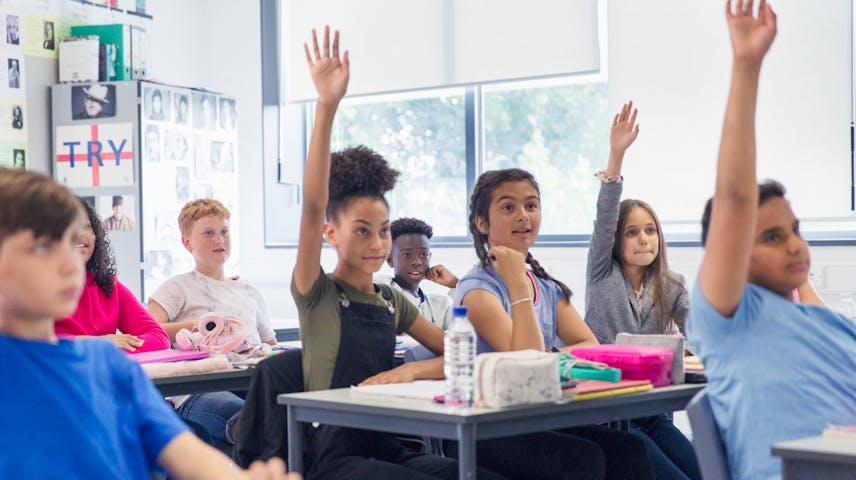
Middle school students are asking big questions about who they are and where they fit in the world. They’re developing their own opinions, their own humor and their own passions. They’re capable of deep thinking, real empathy and surprising creativity—when adults give them the chance to show it.
What’s Happening in the Brain
To understand why middle school feels so intense, you have to understand what’s happening inside the brain during these years.
During early adolescence—roughly the middle school years—the brain goes through a period of rapid change. In fact, according to researchers at Boston University, this is one of the fastest periods of brain development in a person’s entire life. The only time the brain changes this quickly is in the first three years of life. The big difference? Middle schoolers are awake and aware for all of it.
Here’s what’s happening inside the brain: the part that processes emotions and excitement, called the limbic system, develops very quickly during these years. It’s basically in overdrive. Meanwhile, the part of the brain responsible for calm, rational thinking, the prefrontal cortex, takes much longer to develop. It won’t be fully mature until a person’s mid-twenties.
Tina Durand is a researcher and professor at Boston University who studies young adolescents. She was interviewed in an article called “The Power of the Middle School Years” in BU Today magazine. Durand describes it this way: it’s like driving a car with a powerful, souped-up engine—but only bicycle brakes.
In other words, middle schoolers feel things intensely before they have all the tools to slow those feelings down. That doesn’t make them broken. It makes them human beings going through one of the biggest transformations of their lives.
The brain is also extra-sensitive to social situations during these years. Small shifts in friendships—the kind adults might not even notice—can feel like earthquakes to a young person who is wired to pay attention to every social signal around them.
A Time of Real Growth
Here’s the reframe that researchers most want people to hear: the things that make middle school hard are the same things that make it meaningful.
The reason friendships feel so intense? You’re learning how to understand other people and developing empathy and perspective-taking skills that will matter for the rest of your life.
The reason emotions run high? Your brain is becoming more attuned to the world around you.
The reason everything feels like a big deal? Because you’re figuring out who you are.
Middle school isn’t just an awkward in-between. It’s a real chapter—one full of growth, creativity and potential.
What Middle Schoolers Actually Need
So what do researchers say middle schoolers need most?
To Be Heard
Studies show that young adolescents are motivated when they feel their opinions matter and when they get real choices about their learning and their lives. At one school in Virginia, students were given the freedom to choose their own projects, work with friends and design how they spent their time. Those students scored above average on measures of emotional well-being.
To Move
Because of the physical changes happening during puberty, sitting still for hours isn’t just boring—it’s genuinely hard on the body. Rebecca Shangraw, a Boston University researcher, says teachers can use short bursts of physical activity to help students reset their focus and manage their emotions. Movement isn’t a reward. It’s a tool.
More Time to Connect
Middle school brains are wired to learn through social interaction. Research shows that students actually have deeper conversations about real ideas when they’re with their friends. Yet many schools reduce recess and group work right at the age when students need it most.
Adults Who Believe in Them
This might be the most important one. Durand’s research, which included interviewing middle schoolers in Boston about their lives, found young people who were deeply thoughtful, socially aware and hungry to be understood. What made the biggest difference? Adults who approached them with curiosity instead of judgment.
“They need us so much,” Durand said. “We have to be prepared to have an open heart and a strengths-based perspective.”